
Second Naivety: Why Mastery Looks Like Simplicity
“Some years ago Haruomi Hosono went to Cuba, and he saw a very old musician, maybe in his 80s, playing bass in a club or a bar, and his expression about this old musician was, “This old guy plays the bass like cutting tofu.” You must be very gentle cutting tofu, otherwise you can damage it, break it. I love that expression, and I want to be like that. I should be like that at 80.”
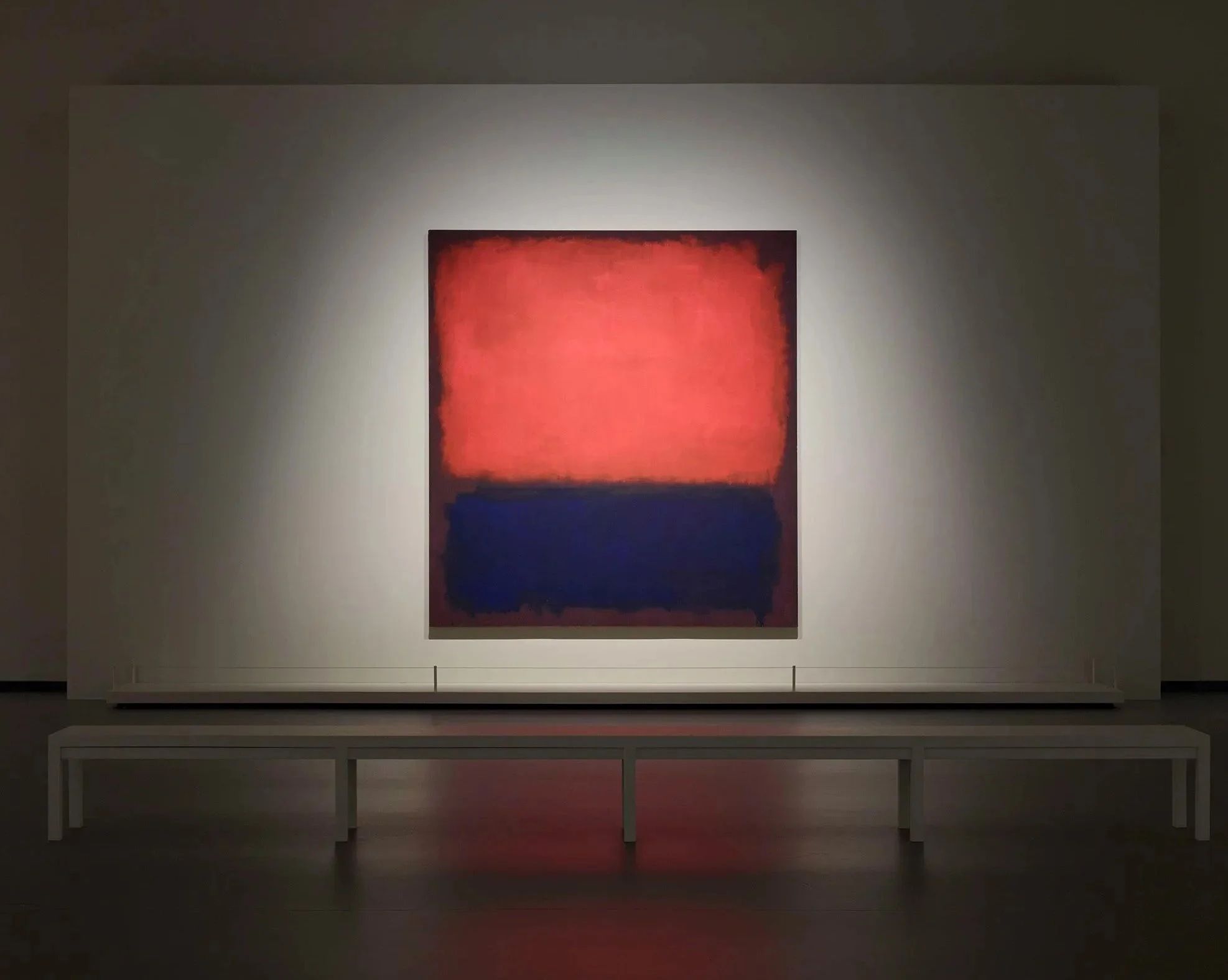
№14 by Mark Rothko, 1960
Late Cézanne looks simpler than early Cézanne. Late Rothko looks simpler than the work that came before it. Late Beethoven can sound as though an outer layer of explanation has been stripped back. On the surface, the work appears to be doing less, with fewer signals and less visible effort. Yet the opposite is true: the work is vastly harder. Harder to make and harder to imitate, it carries less display and more consequence.
That should be a puzzle. Why would decades of accumulated sophistication produce work that appears, at first glance, to have shed sophistication? Why does mastery so often end by refusing to look like mastery?
One possible answer begins with the mystery of our perception.
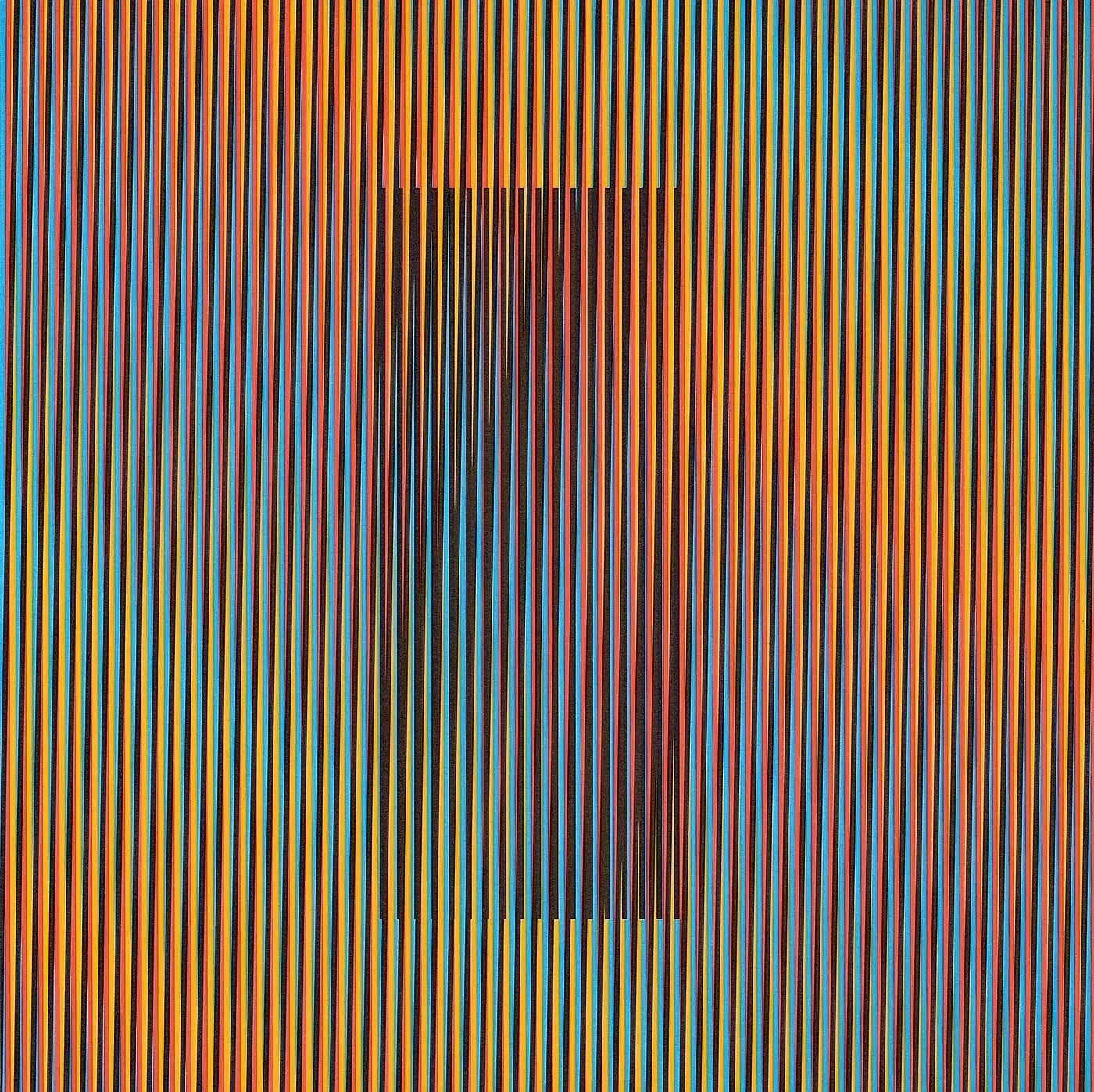
Inducción Cromática a doble frecuencia Toledo by Carlos Cruz-Diez, 2017
Before we learn the world as a set of distinct objects, we meet it as a field. This is developmental, not mystical. The infant begins not with a catalogue of objects but with undivided sensory surroundings out of which distinctions are gradually extracted. Edge, object, category, figure, background, relevance: these are achievements. Attention learns to divide. Cognition learns to parse. Development is, in large part, a disciplined breaking-apart of what first arrives together.
But every gain in discrimination introduces a loss. The world becomes more navigable, and also less unified. You become better at separating what is there, and worse at receiving the field before separation. The apparatus develops. Precision is purchased by pruning.
Most aesthetic training intensifies this process.
You learn harmony apart from timbre. Form apart from gesture. Palette apart from composition. In writing, argument apart from tone. In audio, transients apart from weight, brightness apart from intimacy, width apart from depth. Each distinction is real. Each one improves control. But each one also risks teaching the practitioner to experience parts more readily than wholes.
That is the ordinary shape of sophistication: accumulation through separation. And it is where many people stop.

Homage to the Square: Blue or Pink or Red by Josef Albers, 1951
They become articulate about components, and they can identify, compare, diagnose, classify with ease. Their taste sharpens. Their interventions become more precise. But their work often plateaus there, because the very powers that made them skillful now stand between them and direct experience. The analysis does not merely clarify the thing , it starts to replace it.
This is the trap. Over-developed mediation masquerading as sophistication. A relationship to technique that cannot stop announcing itself.
French philosopher Paul Ricoeur’s phrase for the movement beyond this point is second naivety. He used it in hermeneutics, describing how a text might be read after critical analysis without collapsing back to pre-critical reading. The structure generalizes outward because there is a state beyond analysis in which immediacy can return, not by discarding what has been learned but by passing so fully through it that the learned structure becomes transparent.
That transparency is the whole point; it is sublimation.
Second naivety is earned, not recovered. The child’s unity is prior to analysis. Second naivety emerges on the far side of it. The separations remain real, but they no longer dominate experience as separations: they become available without becoming obtrusive.
The mature practitioner no longer needs to exhibit understanding because understanding has changed levels. It is now built into perception itself. This helps explain why late work can look simpler while being harder than anything that came before it.
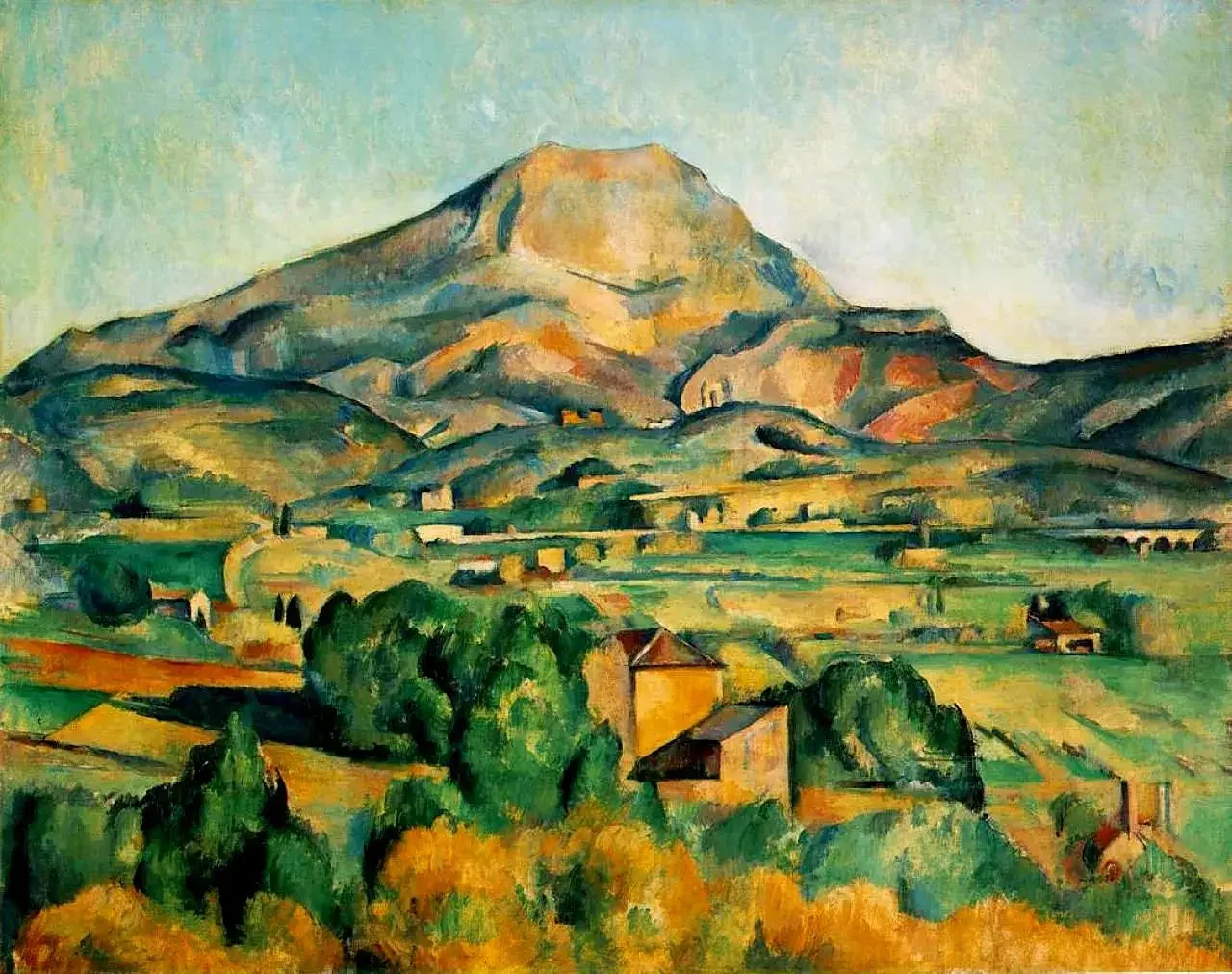
Mont Sainte-Victoire by Paul Cézanne, 1895
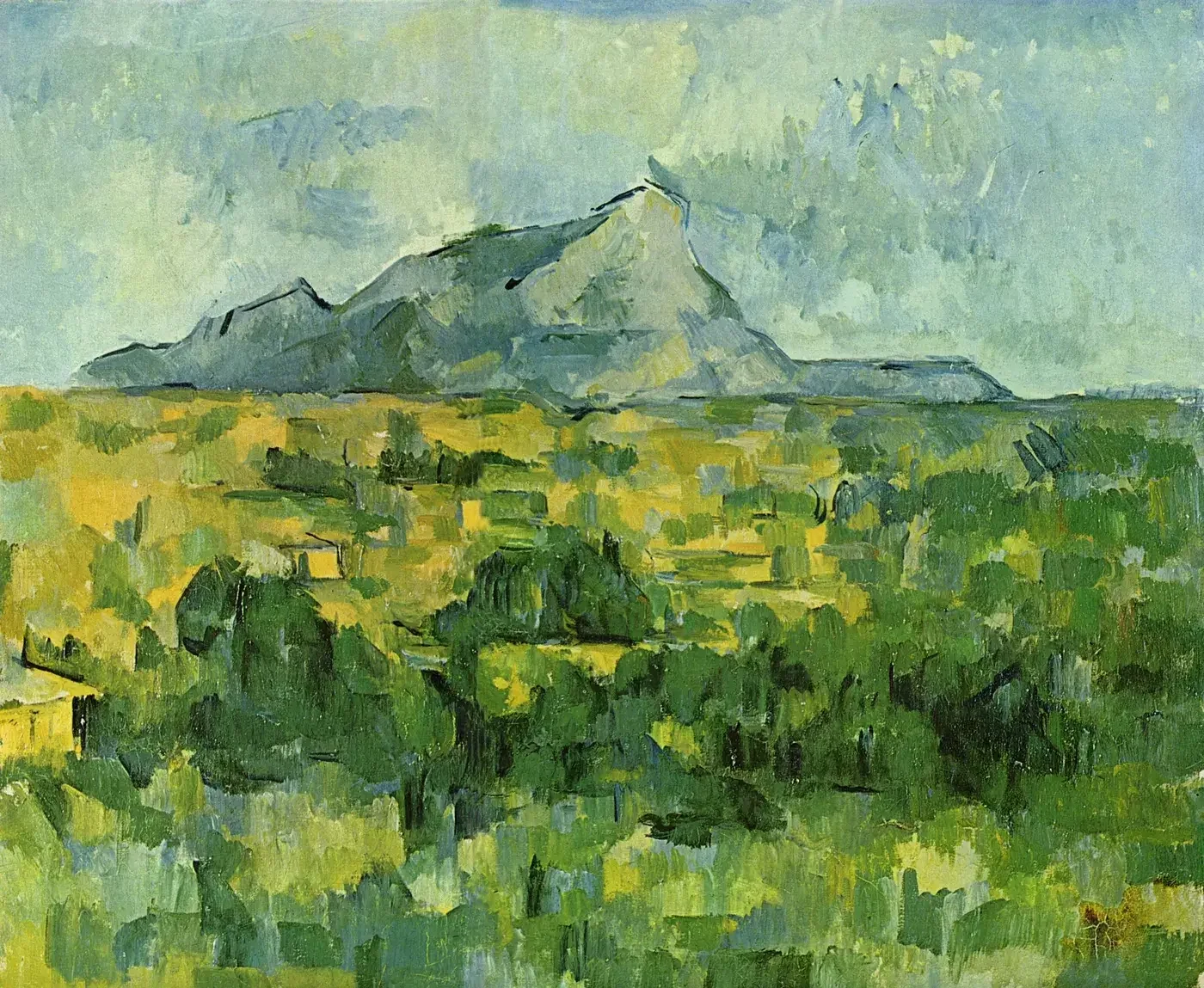
Mont Sainte-Victoire by Paul Cézanne, 1906
Take Cézanne. For decades he studied Mont Sainte-Victoire as a problem of structure, plane, color relation, and spatial instability. The mountain is not merely depicted in his work. It is worried, tested, re-seen, broken into tensions between facets. He spent years refusing inherited pictorial shortcuts so that the act of seeing itself could be rebuilt on the canvas. Only after that prolonged difficulty did the mountain begin to return with a unique wholeness. Not as naive landscape, or as a scenic image, but as a single perceptual event held together by innumerable decisions that no longer needed to explain themselves.
Or Rothko. The late paintings are often mistaken for simplicity of motif implying simplicity of making. But Rothko had to work through figuration, mythic symbolism, surrealism, and a long struggle with how forms assert themselves before he could arrive at those suspended rectangles where figure and ground begin to collapse into one another by design. What he achieved was not “less.” It is a form where the painting no longer requires a visible apparatus of complication to produce complexity of encounter. It meets the nervous system all at once.
Late Beethoven offers the same lesson in time rather than color. Particularly in the quartets, where material breathes without pointing to the architecture holding it. The scaffolding has gone inward. One is inside a thought whose necessity is felt before it is explained.
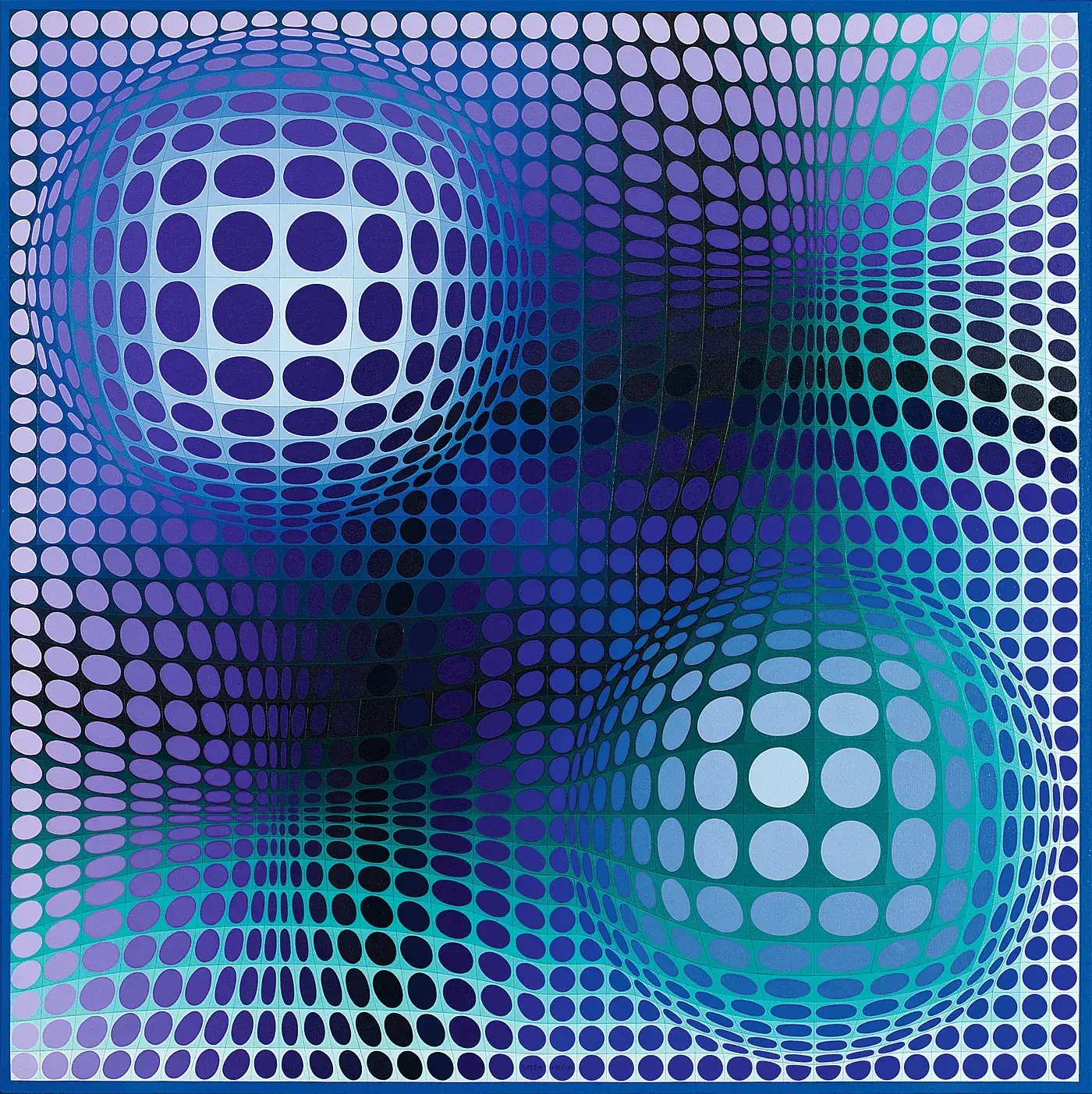
Feny by Victor Vasarely, 1973
This is the point where the aesthetic question becomes a practical one for me.
In mastering, the mature target is transmission, not audible technique. The listener should encounter a song, not a mastering job. Technique remains primary. It must become load-bearing without becoming theatrical.
Translation-first work is the cleanest example I know. You are constantly managing relationships that are technical in form and perceptual in consequence: spectral balance, density, transient shape, low-end stability, vocal placement, fatigue, scale, collapse, emotional continuity from section to section, translation across playback systems.
These are necessary aspects of the craft. But if the work is any good, the result does not present itself as a sequence of solved engineering problems. It presents as inevitability: the track feels coherent and the record survives contact with the world.
That kind of invisibility is the achievement.
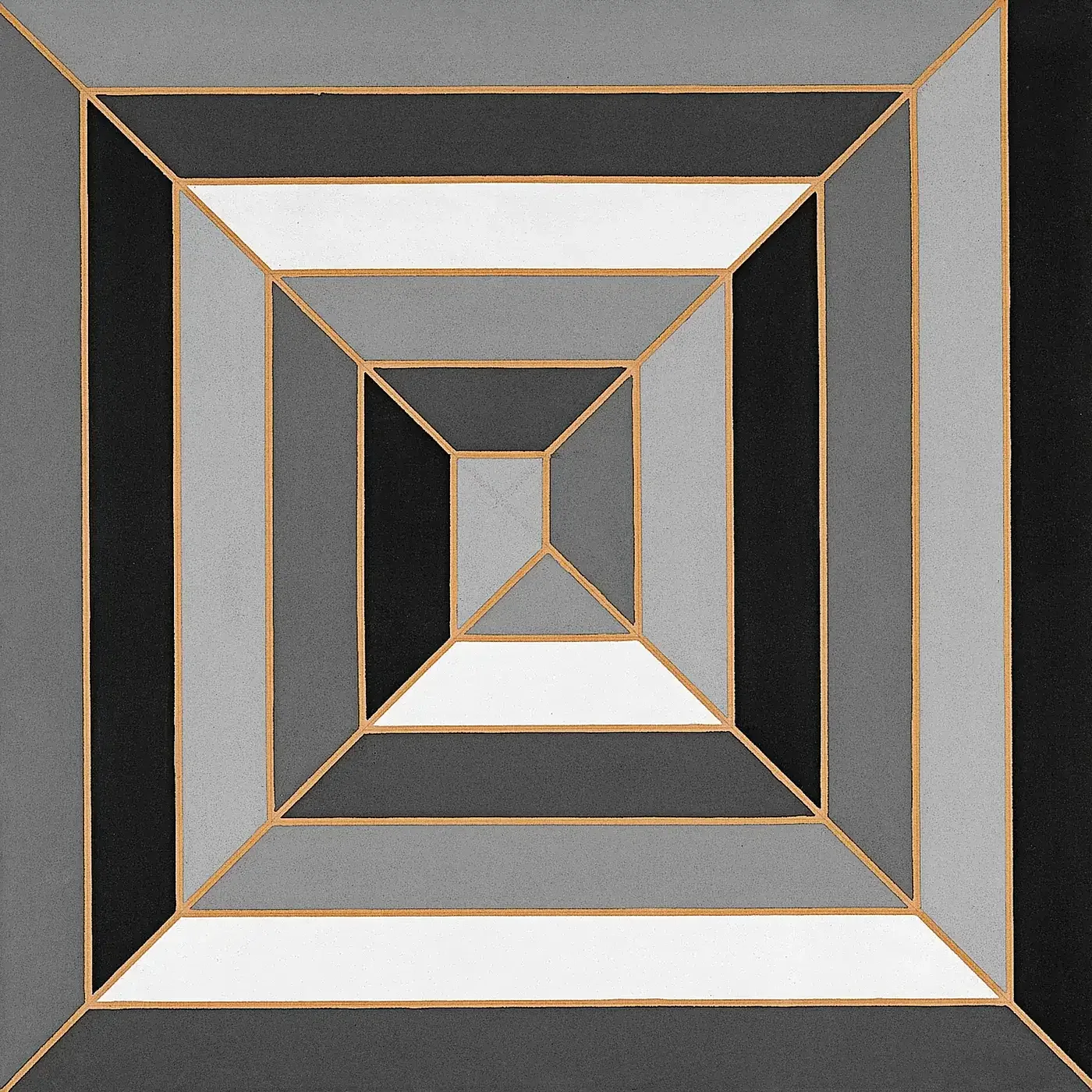
Untitled by Frank Stella, 1966
Early work tends to require its decisions to be legible. The brightness reads as brightness, the punch as punch. The intervention has to be perceptible because perceptibility feels like proof of work. But visible sophistication is usually a sign that one is still operating in the phase of separation. Each category still has to appear distinctly enough that competence can be heard moving among them.
Mature work does not need that reassurance. When technique has been properly internalized, categories remain available but stop behaving like separate performances. Tone, depth, impact, intimacy, and translation begin to act as one thing. You are no longer toggling between checkboxes with the anxious hope of arriving at art through accumulation. You are shaping a whole.
That is why simplicity in finished work can be so deceptive. The apparent ease is the record of thousands of hard exclusions: this frequency not that one; this gesture not that one; this amount and no more. Simplicity is what remains after serious, complex options have been tested and left behind.
The cultural problem is that we increasingly reward the opposite.
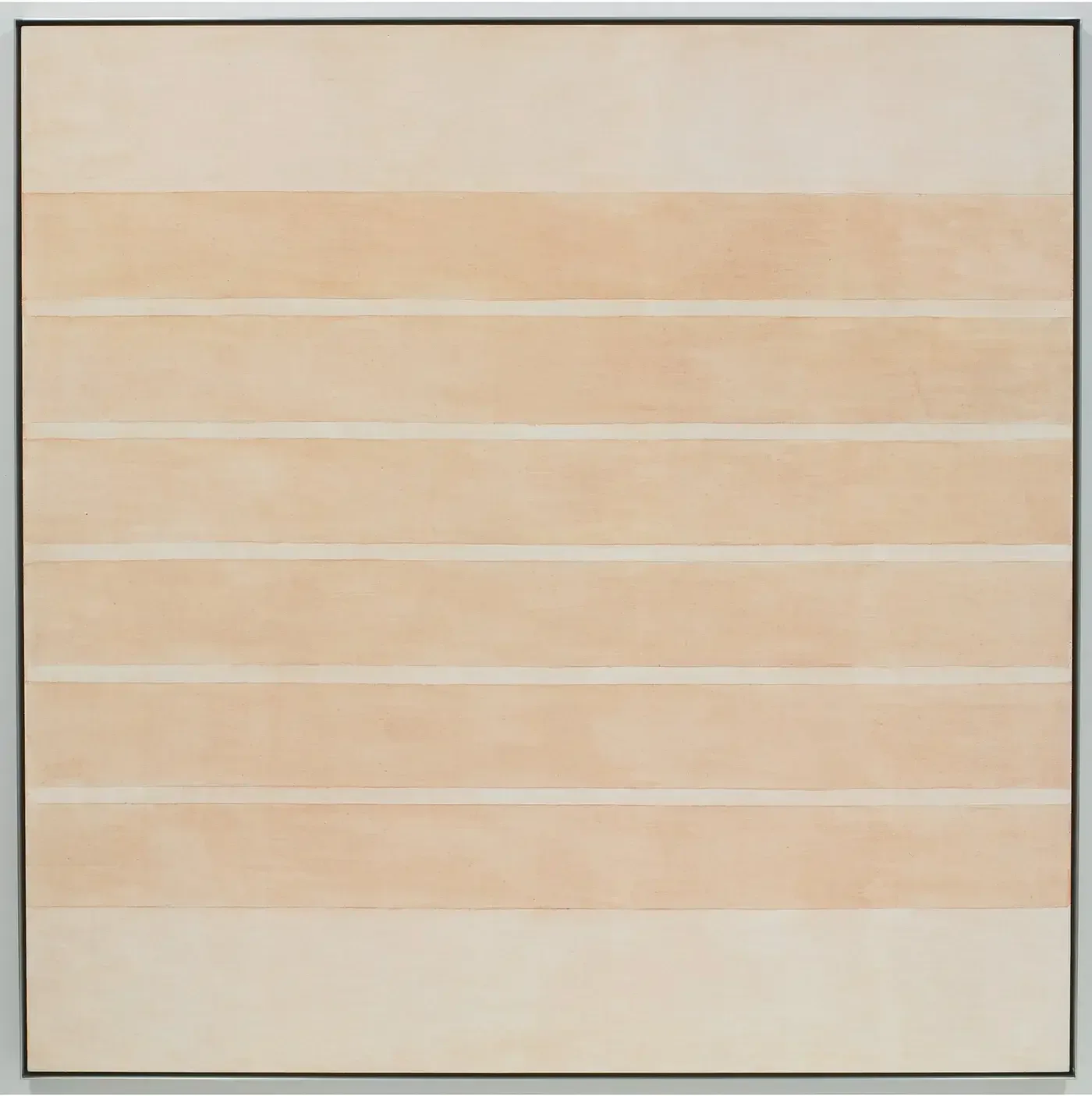
Untitled #10 by Agnes Martin, 2002
We reward visible sophistication. In writing, language that performs intelligence rather than carrying thought. In criticism, taxonomy mistaken for understanding. In art, effort mistaken for depth. The practitioner learns ( consciously or not ) that it is safer to exhibit the machinery than to internalize it. Exhibition reads as mastery to a culture that no longer trusts quiet authority.
But the invisible achievement is still the real achievement.
Performed mastery is often unfinished mastery. It still needs the scaffolding to announce itself as scaffolding. It has not yet crossed back into directness. Earned simplicity has: it has passed through the separations and arrived somewhere beyond the need to stage them.
So the opening puzzle is not really a puzzle once you see that movement clearly. The late work looks simpler because it is no longer spending energy proving what it knows. The knowledge has gone inward. The parts have not disappeared, they have become transparent to the whole.
The simplicity was never a regression, it was the whole point.
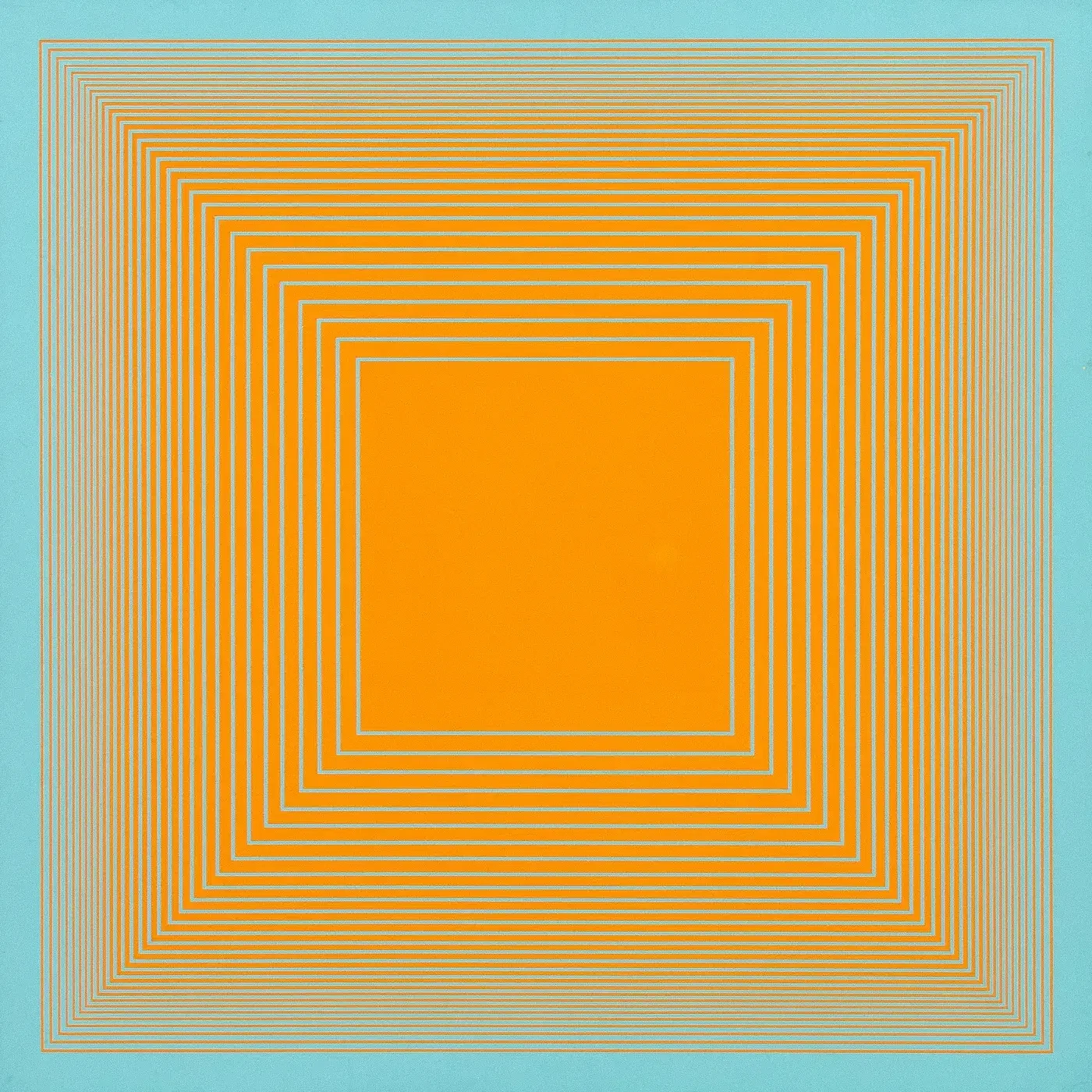
Spectral 9 by Richard Anuszkiewicz, 1969
“I like getting older, and I’d love to see whether I can play like that— you know, like cutting tofu on the piano. This is my hope.”