
The Five Forms of Attention
A culture that floods consciousness with information while stripping it of proportionate action does not merely distract attention. It trains dependence on capture. For that reason, objectless attention has become a civic as well as contemplative necessity. (Note: here, objectless does not mean empty of reality; it means not organized by the demand for a discrete target.)
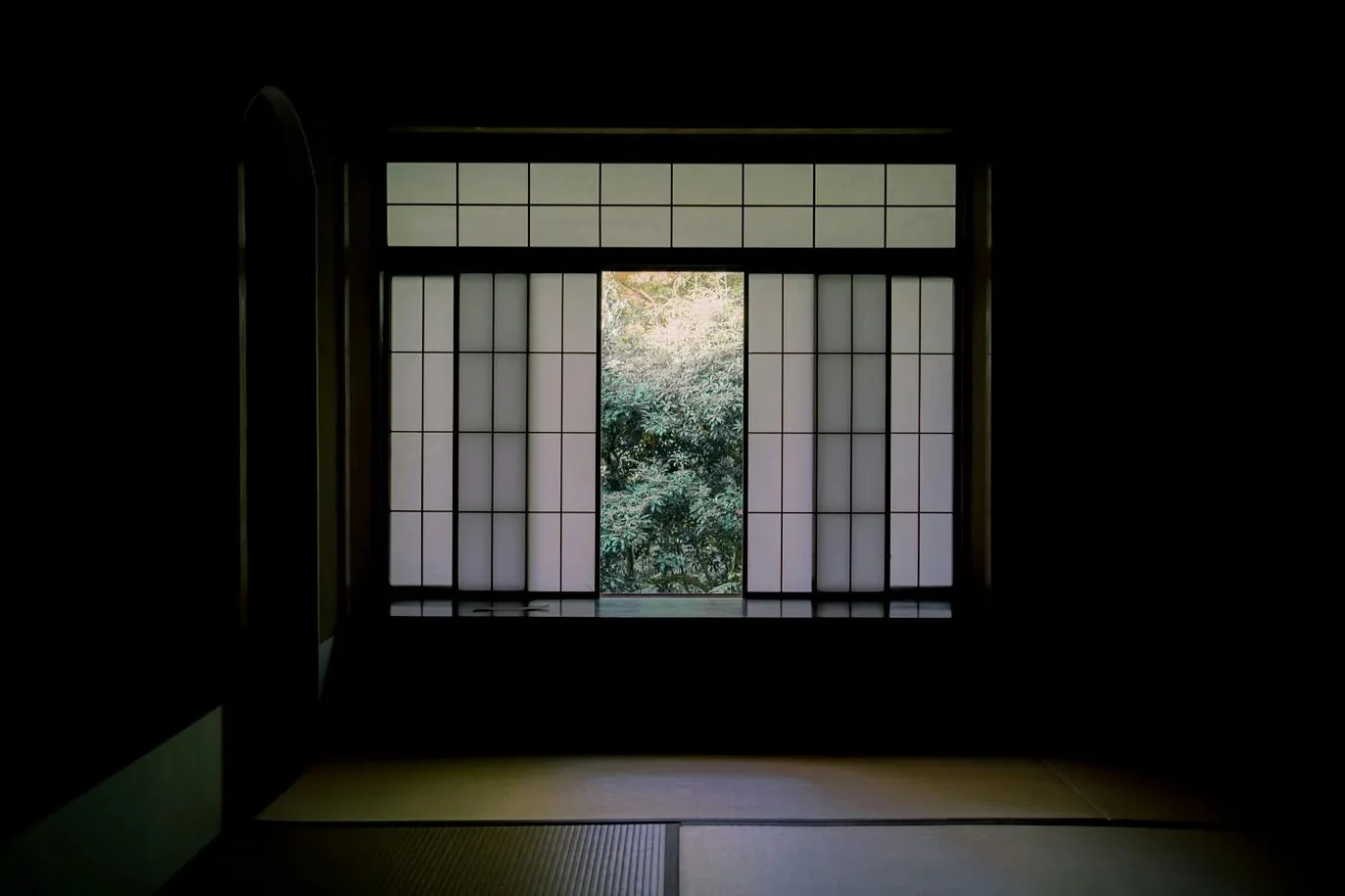
Most talk about attention is too weak for the thing itself. It gives us a hygienic binary, focused or distracted, and then asks us to manage our habits a little better. That binary misses the structure of the problem. The mind is not simply either on task or off task. It can be governed by a standard, claimed by another being, drawn into the search for meaning, organized by threat, or kept open without needing a target at all. These are deeply different arrangements of cognition.
And so attention needs a taxonomy.
Not because taxonomy is elegant (or fun), but because the alternatives are worse. If every form of attention is treated as a variation of “paying attention,” then craft collapses into concentration, care collapses into sentiment, interpretation collapses into intelligence, vigilance collapses into anxiety, and objectless attention collapses into relaxation. Each collapse makes us stupider than the subject requires.
The principle of differentiation is simple. Each form of attention can be distinguished by at least three structural variables: whether it is object-directed, what is at stake when it fails, and what kind of loss occurs when it is withdrawn. Once those variables are named, the five forms arrange into a clear structure.

Craft attention is object-directed attention governed by a standard whose failure has consequences in the work. The mastering engineer, the surgeon, the welder, the copy editor, the ceramicist: all attend under conditions where form matters and errors cash out in reality. Withdraw craft attention and the work degrades. Not abstractly: the cut is rough; the sentence stumbles; the file is technically compliant and still doesn’t sound right. Craft attention is not merely sustained focus. It is disciplined discrimination under conditions of consequence.
Devotional attention is object-directed too, but its object is not a task, it is a being. Its governing term is fidelity, not standard. A mother attending to a child, a partner caring for someone in pain, a nurse staying present at the bedside: all operate inside a structure where what matters is not correct execution alone but answerability to another life. Withdraw devotional attention and the loss is relational before it is functional. The other becomes unattended, then unseen, then handled. The bond frays because care has been replaced by management.
Interpretive attention is the form that seeks meaning. It notices pattern, implication, relation. It asks what this belongs to, what it reveals, what world it names. Interpretation does not merely receive, it organizes. It draws significance out of dispersion. Withdraw interpretive attention and the world flattens into disconnected instances, noise without articulation. Yet interpretation that cannot stop becomes over-reading, projection, paranoia, conspiracy. Meaning is forced where patience was required.
Vigilant attention is organized by threat. It scans. It monitors. It keeps a live map of instability. This is the attention of prey, of trauma, of the animalistic being in us. Vigilance is ancient, rational, and often necessary. Withdraw it where danger is real and you miss what mattered in time to answer it. But vigilance that cannot rest ceases to be protective. It becomes total atmosphere. Then attention no longer serves life—life serves scanning.
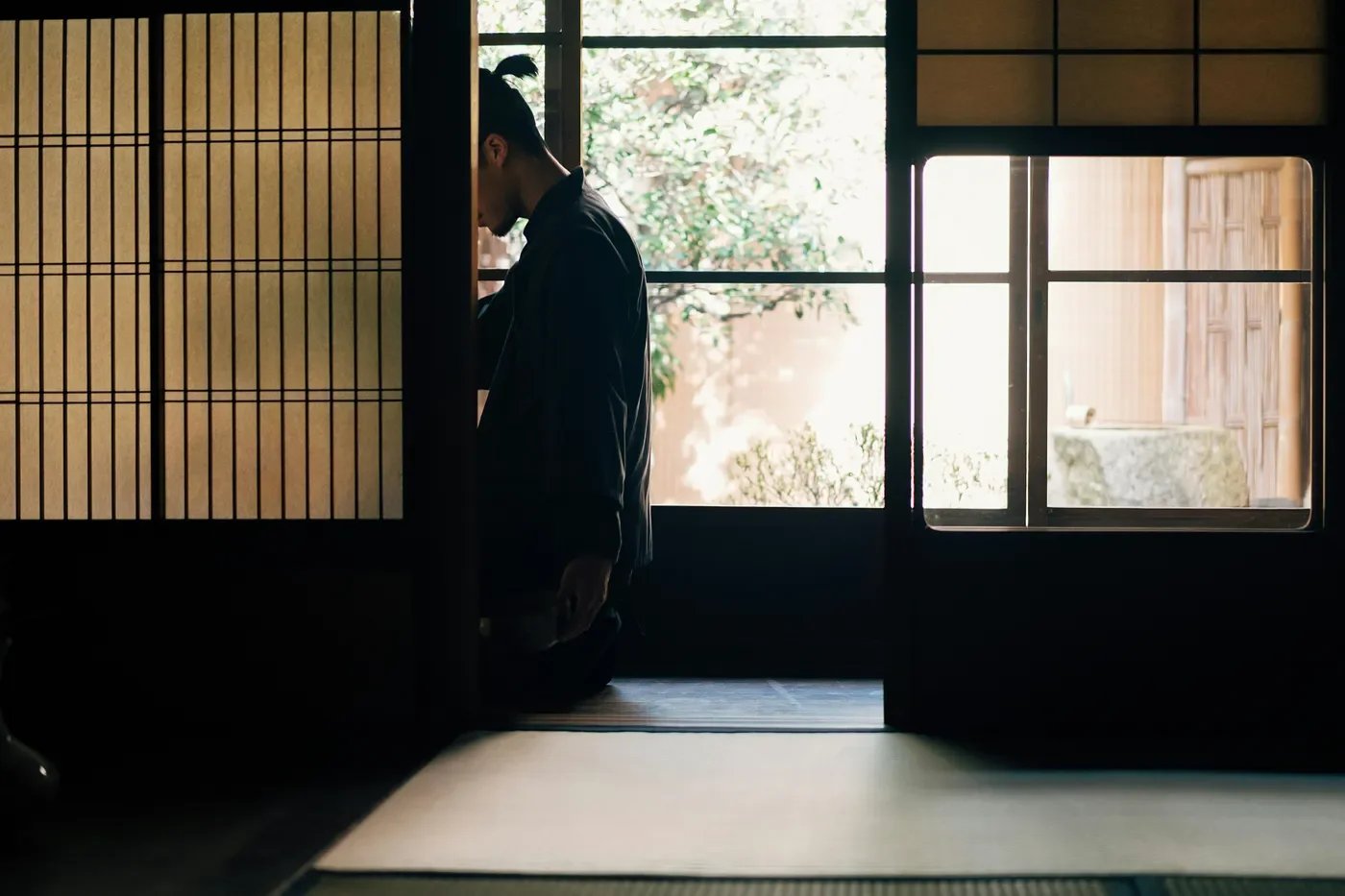
Objectless attention is the outlier and the hinge. It is not directed toward a task, a being, a threat, or a pattern to decode. It is the trained capacity for attention to remain alive without needing to be fed an object. That distinction matters. This is not vagueness, passivity, mental drift, or the absence of cognition. It is the refusal to let cognition become fully dependent on solicitation.
Here shikantaza and other forms of objectless meditation matter, but only when described structurally rather than ornamentally. Structurally, shikantaza is trained objectless attention. It does not ask the mind to hold a mantra, visualize an image, count a breath, or solve a koan. It asks for sitting without object-demand, without loop-closure, without the small relief that comes when judgment lands and the mind can say: there, I did something. What it trains is not serenity. It trains the ability to remain present without requiring input in order to feel that consciousness is functioning.
That capacity is now rare enough that many no longer recognize it as attention at all.
Modern life does not merely distract attention: it deforms its structure. The social-media or news feed is the clearest example because it recruits several forms at once and degrades all of them. It recruits interpretive attention through instant meaning-making. What does this post imply? Who is right? What side is this on? It recruits vigilant attention through outrage, danger-signaling, ambient emergency, endless reminders that something somewhere is wrong. It recruits devotional fragments too, but in damaged form: moral feeling detached from durable relation. What it erodes, systematically, is the capacity to remain present without a prompt.
Neil Postman diagnosed part of this before the feed existed. His worry was not merely that people were consuming trivial content. It was that modern media delivered information far beyond the reach of meaningful response. The result was not knowledge in any serious sense but a peculiar helplessness. One could know more and more while acting less and less. The information–action ratio broke.
That diagnosis still holds, but it no longer goes far enough. The feed does not leave information inert. It surrounds information with cheap outlets that simulate response. We scroll, react, comment, share, judge, and move on. The mismatch remains, but now it is padded with reaction that feels like action. So the deeper problem is not simply informational overload. It is attentional conditioning.

This is where the attention–action ratio sharpens the point. The question is no longer only how much information exceeds my power to respond. The question is what kind of response my attention is being trained to produce. If attention is repeatedly captured by things I cannot meaningfully alter, and if that capture is discharged through tiny loops of reaction, then I become a subject trained in pseudo-agency. Busy, reactive, morally aroused, and structurally unable to convert much of that arousal into judgment, care, or consequence.
Objectless attention does not solve that problem by improving the ratio directly. It does not convert information into action, it steps outside the bad circuit.
A subject who cannot sustain attention without solicitation cannot exercise the patience required for judgment. A subject who cannot exercise judgment cannot reliably convert perception into responsible action. Therefore objectless attention is not a retreat from the political problem, it is one of the preconditions for any serious response to it.
This is why Postman should remain backdrop rather than foundation. He names the disorder of actionability. But the remedy cannot be more information management alone, because the injured faculty is prior to management. The injured faculty is attention itself. More precisely, it is attention’s ability not to lunge.
Objectless attention matters because every other form depends on it negatively, by what happens when it is missing.
Craft attention without objectless ground hardens into compulsion. The worker cannot stop refining because stopping feels like psychic exposure. Standards remain, but they are no longer serving the work. The work is now serving the operator’s need for closure through control.
Devotional attention without objectless ground curdles into anxious attachment. The caregiver cannot sit still with another person’s pain, uncertainty, or slowness. Care becomes intrusion, over-management, or panic under the name of love.
Interpretive attention without objectless ground becomes conspiracy-mindedness in the broad sense, even when socially respectable. The mind cannot leave symbols open, cannot let ambiguity remain ambiguity, cannot bear the unfinished image. It forces coherence as a relief operation.
Vigilant attention without objectless ground becomes paranoia, not necessarily in the clinical sense, but as a style of being. The environment is scanned continuously because nothing in the subject can stand apart from the demand to keep scanning. Threat leaks everywhere because attention has lost its capacity to rest without justification.
Objectless attention is therefore not superior to the others. It is not the highest form. It does not replace craft, devotion, interpretation, or vigilance. It prevents their deformation. It gives each of them room to remain proportionate.
That proportionality is now a political question.

A society that destroys objectless attention does not merely produce distracted people. It produces people who cannot wait before reacting, cannot distinguish salience from importance, cannot tolerate unresolved conditions, and cannot resist the engineered prompt. That is useful to institutions and platforms because it creates subjects who are easy to mobilize and easy to exhaust.
The person who cannot remain present without input will seek input. The person who seeks input will accept solicitation as the condition of aliveness. The person who accepts solicitation as the condition of aliveness is already half-governed.
This is also why the issue cannot be reduced to wellness. The language of self-care makes the problem smaller than it is. Objectless attention is not valuable because it calms us down, though it may. It is valuable because it protects the cognitive conditions under which free judgment remains possible. It protects patience from collapsing into passivity. It protects ambiguity from becoming panic. It protects refusal from being crowded out by reflex.
And it does one more thing. It restores proportion between attention and action by making non-reaction available again.
That line matters: not everything that captures us deserves enactment. Not every stimulus merits judgment. Not every feeling needs discharge. Not every fact that passes through consciousness imposes a duty to perform concern. Objectless attention reintroduces the possibility that noticing can remain noticing long enough for judgment to form. Without that interval, reaction wins by speed.
The moral force of this becomes clearest in dependent life. A child, an elderly person, a patient, someone in pain, someone overwhelmed, someone economically trapped, does not first need an interpreting machine or a scanning bureaucracy. They need the forms of attention that keep them real. Devotional attention that does not reduce them to a task. Craft attention that does not mistake measurement for adequacy. Interpretive attention that does not force them into a prewritten category. Vigilant attention that sees actual danger without making danger the whole world. And beneath these, objectless attention: the capacity to remain with what is there before turning it into a handle.
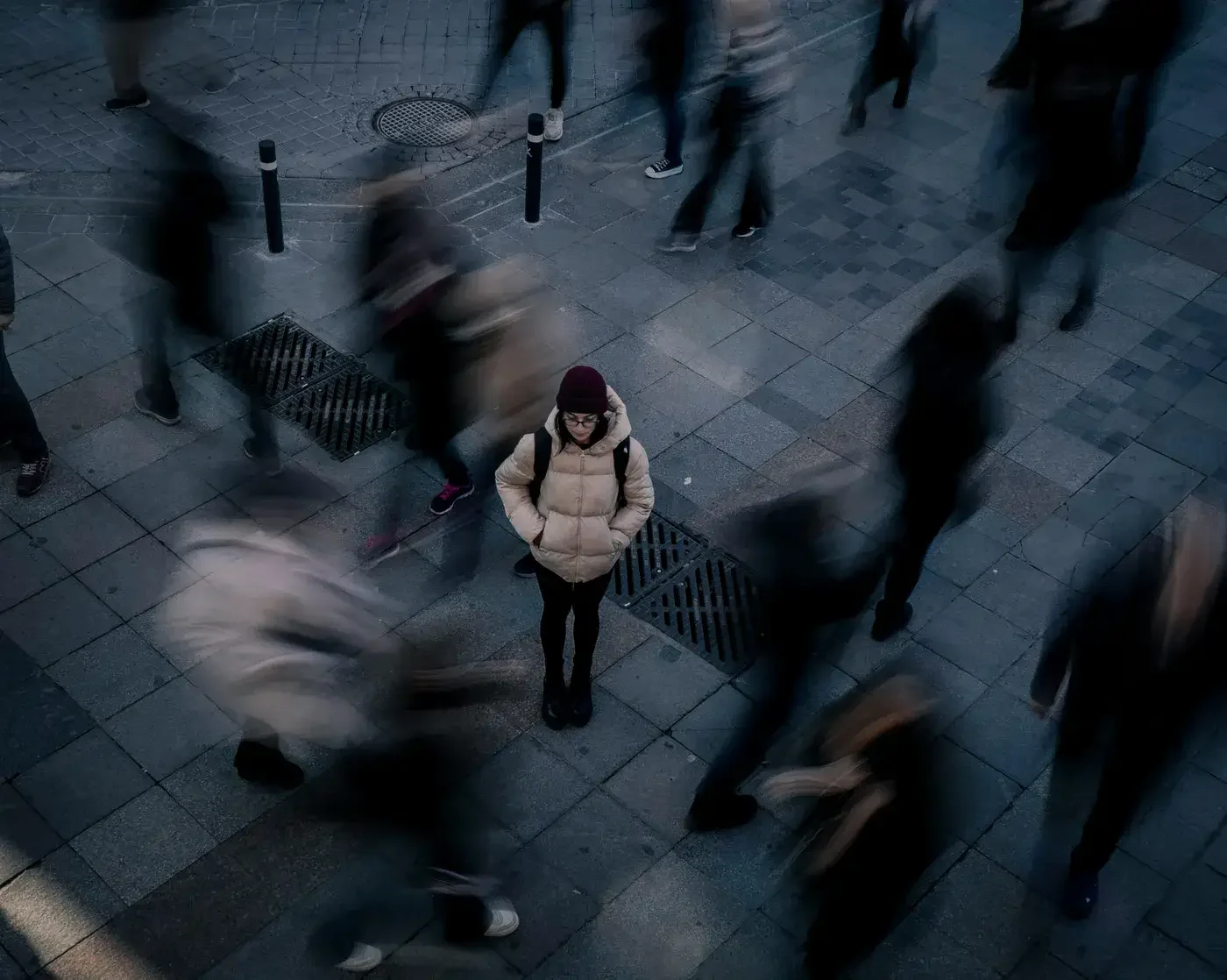
That is why objectless attention is as necessary as patience or ambiguity. In fact it is one of the disciplines by which patience and ambiguity become livable. Patience is not waiting longer while internally thrashing. Ambiguity tolerance is not politely affirming that reality is complex. Both require the mind not to demand immediate closure as the price of continuing.
So the five forms do not sit side by side as equals in a neutral list. They form a live structure.
Craft gives fidelity to form.
Devotion gives fidelity to being.
Interpretation gives fidelity to meaning.
Vigilance gives fidelity to danger.
Objectless attention gives the mind a way not to become enslaved by any one of them.
The final question is not whether we can recover some private inner stillness while the world burns. That is too small, and too vain. The question is what kind of subject a technically mediated world now requires if human judgment is to remain answerable to reality rather than to prompts.
The answer, I think, is a subject capable of all five forms, and especially capable of objectless attention, because without it the rest are recruited, overclocked, and deformed by systems that profit from their excess.
A humane future will not be built by people who are merely informed. It will be built by people who can still decide what is worthy of attention, remain with it without immediate capture, and then act in proportion to what they have actually seen.