
A simple reference for how to send mixes for mastering
1. The Short Version (TL;DR)
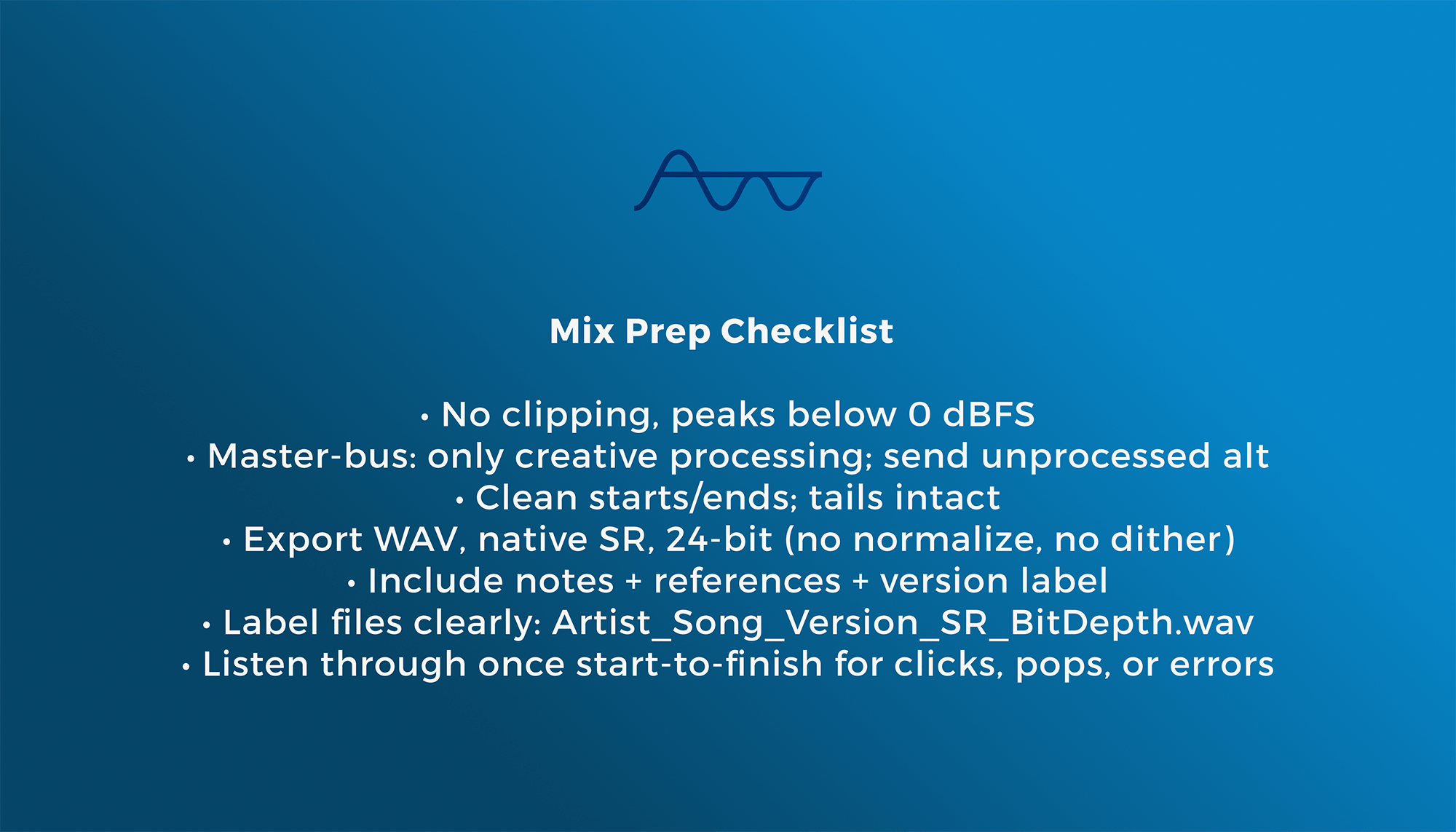
Don’t clip the mix bus (peaks below 0 dBFS).
Keep any creative mix bus tone, but remove safety / loudness limiters.
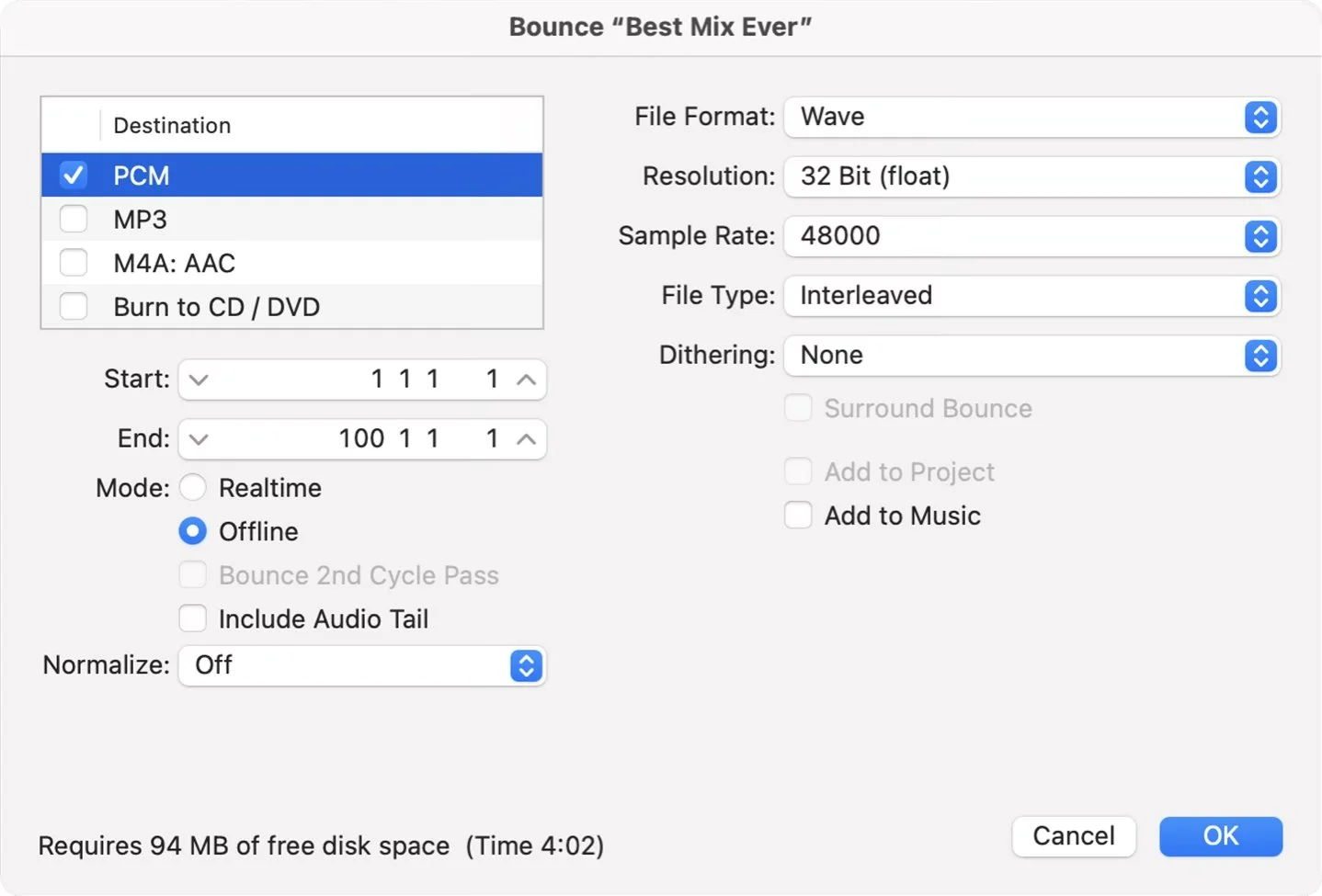
Export WAV at the session’s native sample rate, 24-bit or 32-bit float.
No normalization, no dithering, no trimming of silences or tails.
Label files clearly and include notes and reference tracks.
If you follow that, we’re already in a very good place.
2. Mix Bus & Levels
Remove limiters or “make it loud” plugins on the mix bus.
Keep intentional mix bus processing (compression, saturation, glue) if it’s part of the sound.
Make sure the mix isn’t clipping — peaks should stay below 0 dBFS, with some headroom.
If you’re unsure whether a plugin belongs:
If it’s for tone, keep it; if it’s for safety or loudness, take it off.
3. Session & Export Settings
Alternates:
Artist_SongTitle_Instrumental_v3.wav
Artist_SongTitle_RadioEdit_v2.wav
Artist_SongTitle_TVMix_v1.wav
4. Revised Mixes
Updated mixes happen. When they do:
Label them clearly as revisions:
Artist_SongTitle_Mix_v4_REV1.wav
Mention in the email what changed in broad strokes (e.g. “vocal up 1 dB,” “de-essed top end,” “kick fixed”).
Please try to avoid sending “mini tweaks” as separate versions — aim for one, confident revision when needed.
Pricing for revised mixes is outlined on the Services page; feel free to check that for details.
5. Notes & References
Along with the audio, it’s very helpful if you can include:
1–3 reference tracks (streaming links are fine).
A short note on what you’re aiming for: tone, loudness, and general feel.
Anything I should not change (e.g. “I like the vocal brightness as is,” “low end is exactly where I want it”).
The more I understand your intent, the more precisely I can work.
6. Want the Deep Dive?
This page is the quick, studio-friendly version.
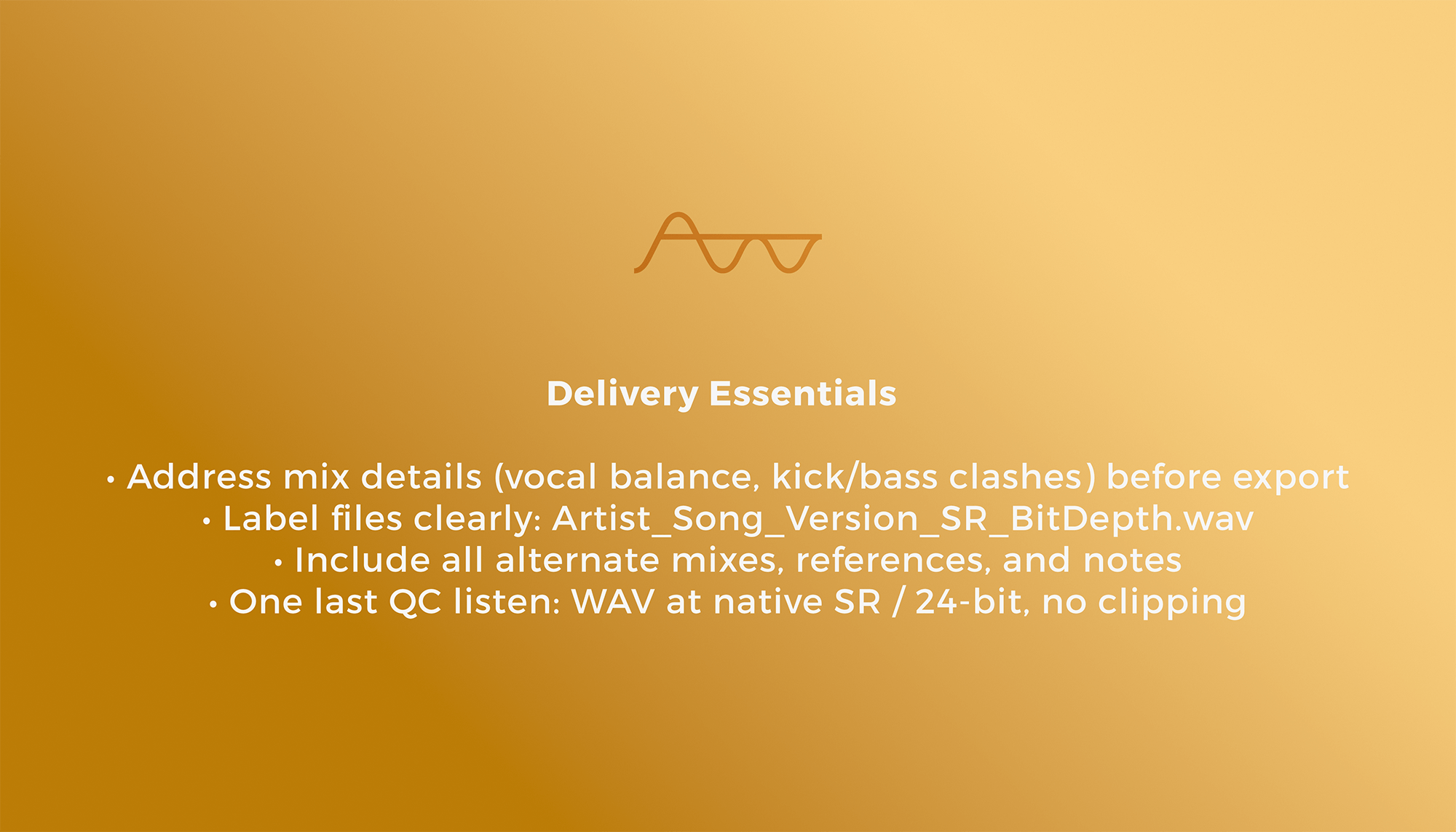
If you’d like a more detailed walkthrough — headroom targets, low-end checks, export screenshots, and a full checklist — you can read A Mastering Engineer’s Mix Prep Guide.
If you follow the steps above, your mixes will arrive in a state where I can focus entirely on what matters: feel, translation, and getting the master to land the way you envisioned. Mastering isn’t a dark art. There are a few solid principles; beyond that it’s listening, judgment, and serving the mix.
Don’t hesitate to reach out if you have questions, comments, or would like feedback on a mix.