
Mastering on Headphones vs Monitors
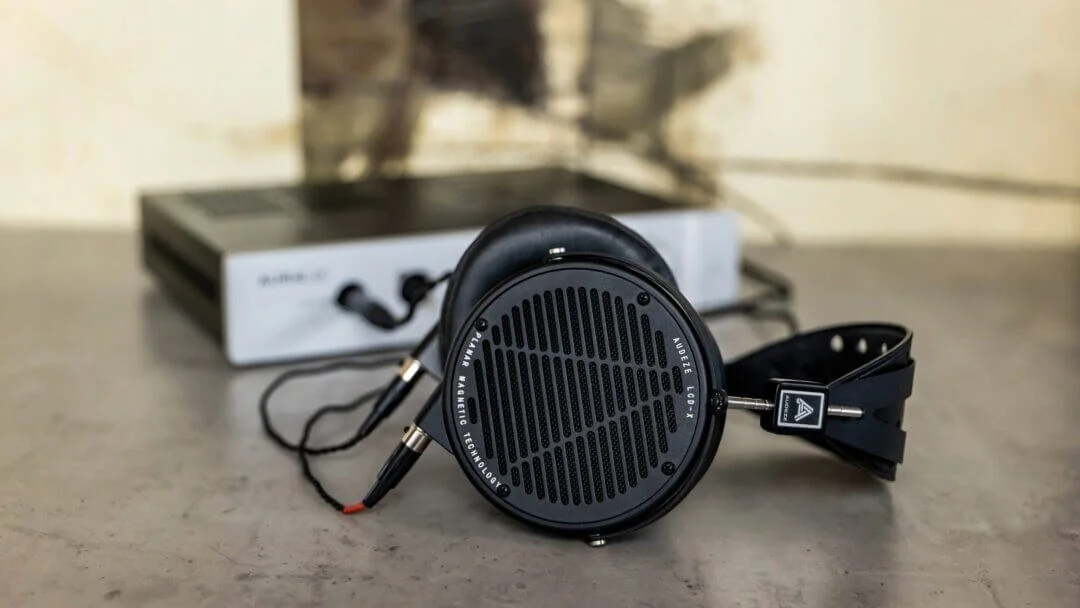
There’s a lingering assumption in audio circles that headphones are just for reference, not for real work. For casual checks or late-night tweaks. The belief is that speakers, in a treated room, are the only legitimate setting for finishing a master.
I disagree.
I’ve worked on both sides. I have top-tier monitors made by ATC. I’ve spent thousands of hours in expertly treated rooms. But most of my day-to-day mastering happens on high-end open-back Audeze headphones. Not out of necessity, but because I’ve built a workflow around them that’s intentional, calibrated, and consistent.
I’m not alone. Engineers like Glenn Schick, Elaine Rasnake, Shawn Hatfield, and others produce excellent work entirely on headphones. The stigma is outdated. Headphones aren’t a fallback: they’re a valid mastering environment when approached with care and precision.
This isn’t about choosing sides. It’s about recognizing the strengths and limitations of both setups and making it clear that headphone-based mastering, especially paired with a fully in-the-box (ITB) workflow, is not just viable. It’s often ideal.
What High-End Headphones Offer
Let’s start with the obvious: control. Headphones eliminate the room from the equation. That’s huge.
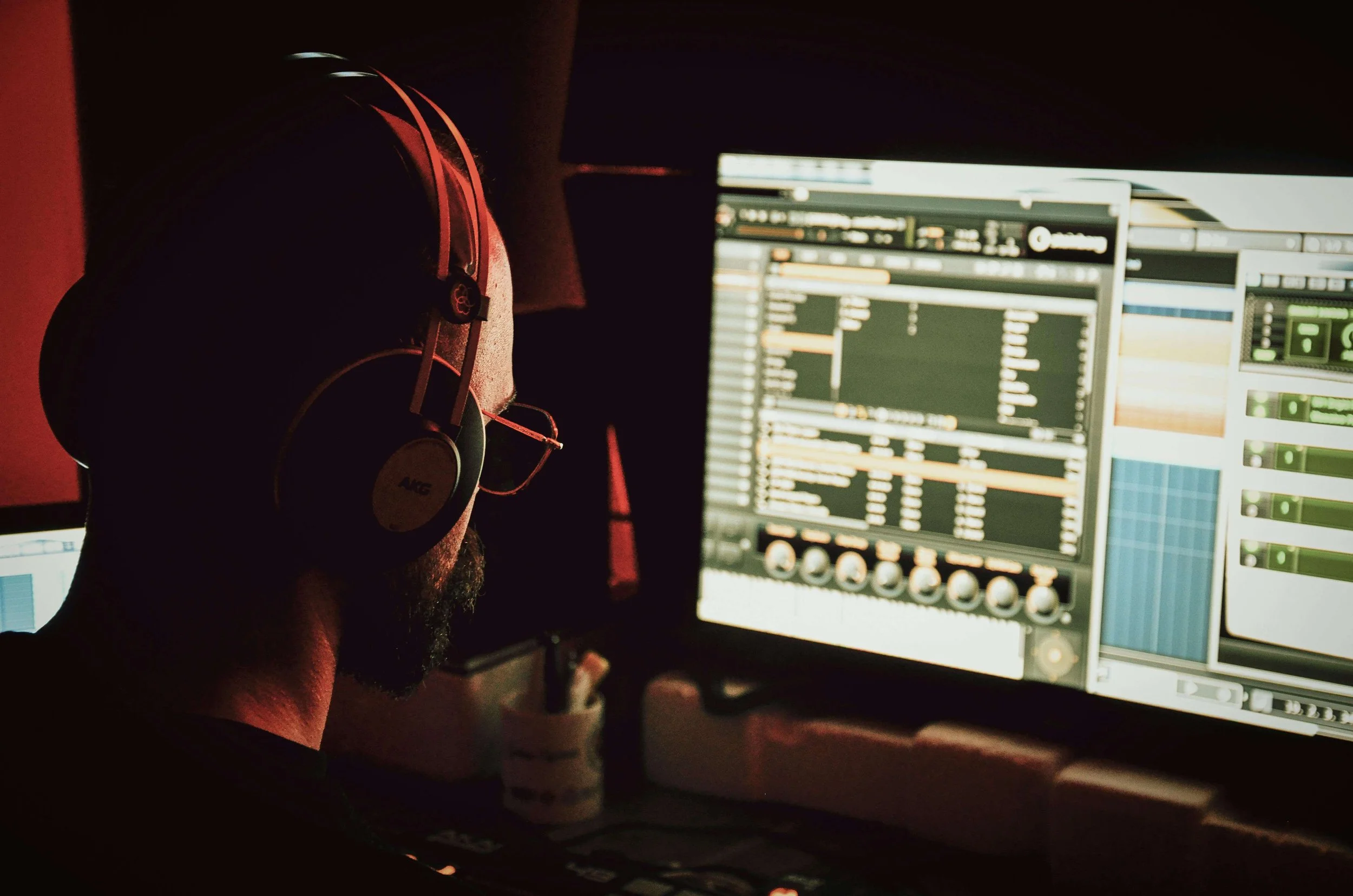
In a speaker setup, even the best monitors are only as accurate as the room allows. Room modes, boundary reflections, SBIR, comb filtering — it’s all real. A $10,000 monitor setup in a poorly treated room will mislead you. Headphones bypass all of that. No room, no room problems.
More than that, good headphones deliver precision. The level of detail you get with high-end open-backs (LCD-X, HD800S, Clear MG, etc.) is unmatched. You catch every nuance: mouth clicks, transient spikes, plosives, harshness, DC offset, stereo weirdness. There’s no guessing. And once your headphone rig is dialed in, your moves become surgical and efficient.
Consistency matters, too. Speakers change depending on position, volume, time of day, and fatigue. A calibrated headphone rig gives you a stable, reliable reference every time.
What Monitors Do That Headphones Don’t
Speakers bring physicality. You feel the low end. You perceive space differently. Panning decisions come more naturally, reverbs unfold in three dimensions, and transients feel alive. A vocal anchors differently in a room. A kick lands in your chest. That physical impact really matters, especially in genres where energy is key.
Then there’s the phantom center. Headphones, by nature, hard-pan left and right. Without crossfeed, the stereo image collapses inward. Mono can feel off-center. Width can feel exaggerated. You can work around it — but you need to be aware.
Bass is another difference. Even the best open-backs can’t move air like a speaker and sub. You might hear 35Hz, but you won’t feel it. That tactile connection is missing.
And translation matters. Most listeners are still in rooms. If you never check your headphone-based master on speakers, you may miss issues that only show up when sound hits real-world acoustics.
And when it comes to Atmos, there’s no question: headphone monitoring doesn’t cut it.
Mastering from the binaural render, already shaped and folded down by arbitrary DSP, isn’t mastering. Atmos demands spatial calibration and real acoustic context, especially at the production and mix engineering stages. The format is built around speakers, not ear drivers. If you’re working in immersive, you need a properly calibrated room. Period.
Working ITB? It Matters
My entire chain is in-the-box, and that complements my headphone-first approach.
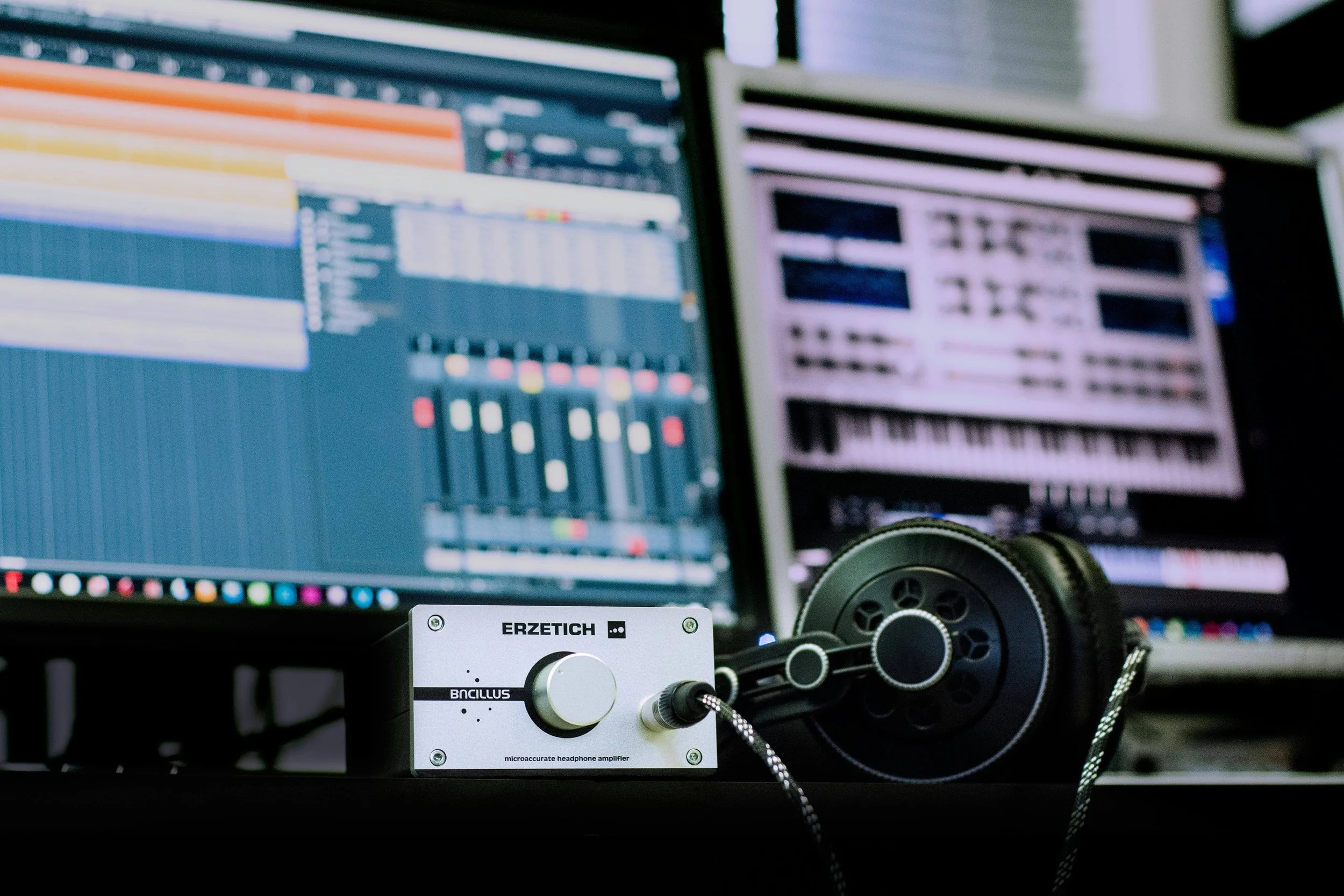
Not because hardware isn’t good. I’ve used analog chains and I’ve compared the gear versus the plugins. I know what a Manley or Fairchild can do. But I stay ITB because it gives me intuitive speed, utmost precision, and total recall. My workflow is built on fine control: upward expansion, subtle EQ shifts, gentle saturation where needed.
Paired with headphones, it creates a tight, transparent mastering space. No unpredictable coloration. No analog noise floor. Just clarity. Just focus.
I’m not anti-analog. I’m pro-context. If it fits your style, use it. But for how I work — fast delivery, detail-oriented, QC-heavy, emotionally sensitive work — ITB just makes sense. With a trusted headphone setup, it’s a studio of its own.
Tradeoffs, Not Absolutes
If you work only on headphones, you might overdo it. The detail can pull you in too far. You start fixing things that don’t need fixing. You lose the forest for the trees.
If you work only on monitors (especially in a flawed room) you risk underdoing it. You trust what you hear, but what you’re hearing may be shaped more by your room than the mix itself.
The point isn’t to pick a side. It’s to know your tools. Learn how your headphones translate. Understand what your room does to your monitors. Use reference tracks. Check your biases, and build trust the long way.
My Chain
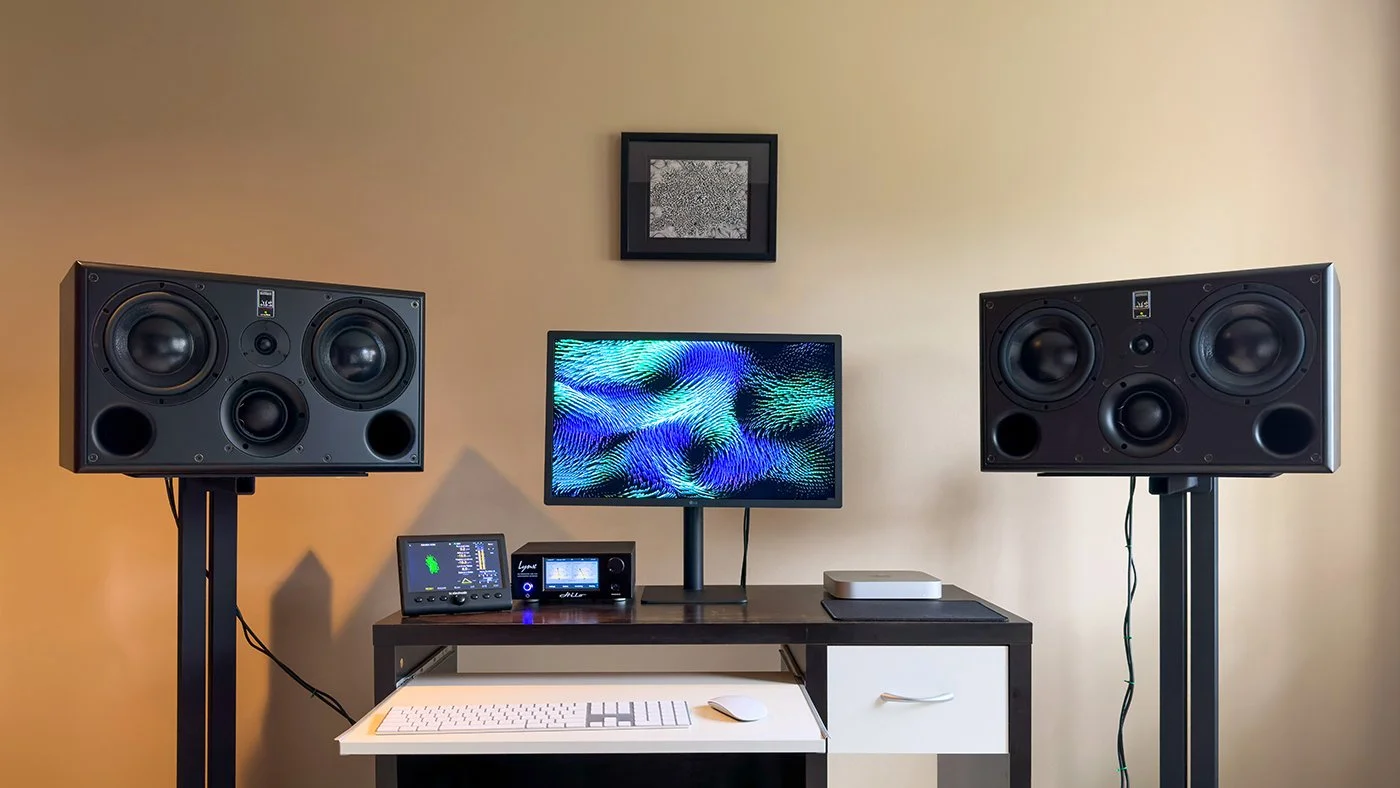
My mastering studio, where over 1,800 songs have come to life.
I do most of my mastering on Audeze headphones, powered by a Chord Hugo TT2, with alternate conversion from a Lynx Hilo out to my speakers. My chain is 100% ITB. No presets. No always-on tools. Every move is track-specific. I know exactly what each plugin does to transients, stereo image, and tone, and I use them with intention.
My ATC SCM45As are there for context. They’re some of the best speakers in the world, used by Bob Ludwig, Daniel Lanois, and Abbey Road Studios. They give an incredible sense of depth, width, height, and space. For low-end realism and as a second perspective they can sometimes be absolutely essential. But most of my actual decisions — EQ, compression, limiting — happen in cans. The results are consistently better that way.
I trust that chain. It’s earned that trust.
Closing Thoughts
Headphones aren’t a compromise. ITB isn’t a shortcut. They’re deliberate choices. And when used with knowledge and care, they can produce masters that hold up anywhere — club systems, earbuds, car stereos, million-dollar rooms.
This isn’t a debate about old versus new. It’s a call to understand your workflow. If what you deliver moves people, translates well, and feels true, no one will ask how you got there.
Tradition has its place, but it’s not the standard. The result is.