
The Color of Sound
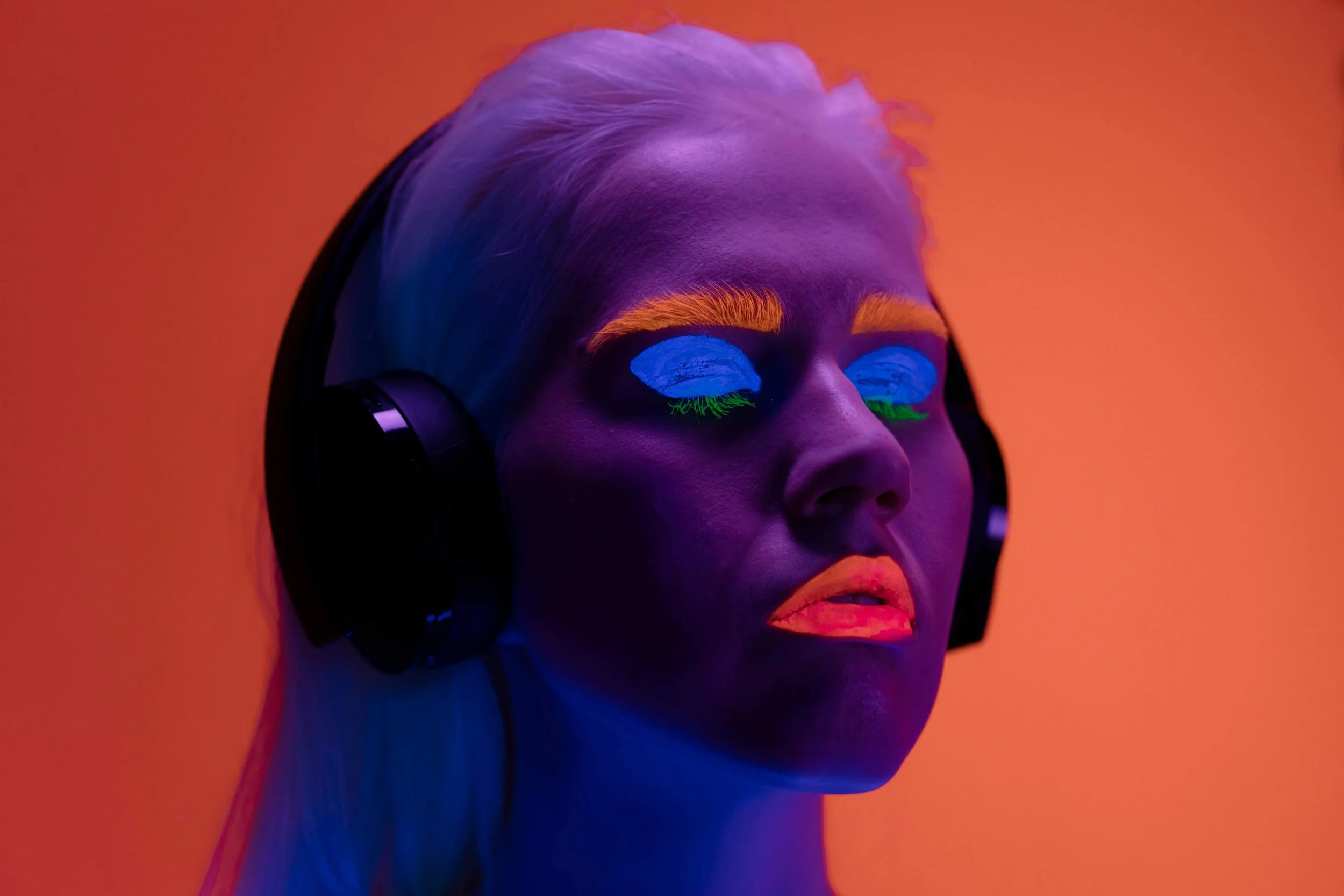
For me, the Beatles’ White Album is actually a canary yellow affair. Jay-Z’s Black Album? Cobalt blue. Orbital’s Brown Album should really be called the Bottle Green Album, in my opinion. AC/DC’s anthem Back in Black? That’s Back in Crimson. Donovan’s Mellow Yellow is mellow pink, and Hendrix’s Red Houseis painted carrot orange. Mondays and the letter B are navy blue. The number 8 and G major chords are brilliant purple. The word irresolute is silver.
My mother is royal yellow, my father is dark purple, and my brother is forest green. Numbers, letters, words, geographic locations, dates, times, notes, chords, songs, and people all carry consistent colour associations. But I’m not mad.
Synesthesia (from the Ancient Greek syn, “together”, and aisthēsis, “sensation”) is a neurological phenomenon in which stimulation of one sensory or cognitive pathway leads to automatic, involuntary experiences in another. People with synesthesia are called synesthetes. It comes in many forms. Some see coloured letters and numbers. Others report that the sound of a car door slamming — or the pitch of middle C — evokes a distinct colour. Some see numbers arranged in 3D space, or feel physical sensations in response to sounds. Some taste words. Some feel what others feel, almost like sensory empathy. Every one of these phenomena belongs to at least one known subtype of synesthesia.
Estimates vary, but studies have suggested synesthesia affects anywhere from 0.05% to 4% of the population.
The associations I listed above represent something of a mixed bag, which isn’t unusual. Many synesthetes report blended forms. I have relatively mild grapheme–colour synesthesia (where letters and numbers are coloured) and chromesthesia (where sounds, notes, and musical keys evoke colour). But I also have inexplicable associations. I don’t know why Detroit is indigo blue, or why my childhood Jack Russell terrier — brown and white — is, to me, fire-truck red.
Musician Dev Hynes once told The Fader that the Empire State Building clearly evokes a Gmaj9 chord for him.
As with most synesthetes, my associations are fixed and automatic. I cannot reprogram them, prevent them from happening, or forget one once it has formed.
I remember when I first realised this wasn’t typical. I was reading a music magazine in my teens and came across an interview with the British rapper Roots Manuva. He was promoting his 2005 album Awfully Deep, describing how he had crafted the record to maintain a consistent “silver” tint. That detail didn’t seem strange — until he attributed it to a condition I’d never heard of, with a strange name. Synesthesia.
A bit of reading confirmed that nobody in my family shared these experiences. After more research and testing, I began to understand and even appreciate my synesthesia.
For most synesthetes, these associations are pleasurable. Synesthesia isn’t listed in the DSM or the ICD, because — like perfect pitch — it isn’t considered a disorder. In fact, the two often co-occur. People with strong chromesthesia may be able to identify keys and chords using a kind of mental colour palette. And while rare forms like misophonia (where specific sounds cause distress) can be disabling, most synesthetic experiences are benign or even beautiful.
Research into synesthesia remains limited, though one 2013 study suggested that people with autism may be up to three times more likely to experience it. The roots are thought to be both genetic and developmental. Artist Carol Steen, co-founder of the American Synesthesia Association, once described an evening at the dinner table:
“I came back from college on a semester break and — I don’t know why I said it — but I said, ‘The number five is yellow.’ There was a pause, and my father said, ‘No, it’s yellow-ochre.’ My mother and brother just stared, like, ‘Is this a new game? Would you share the rules with us?’”
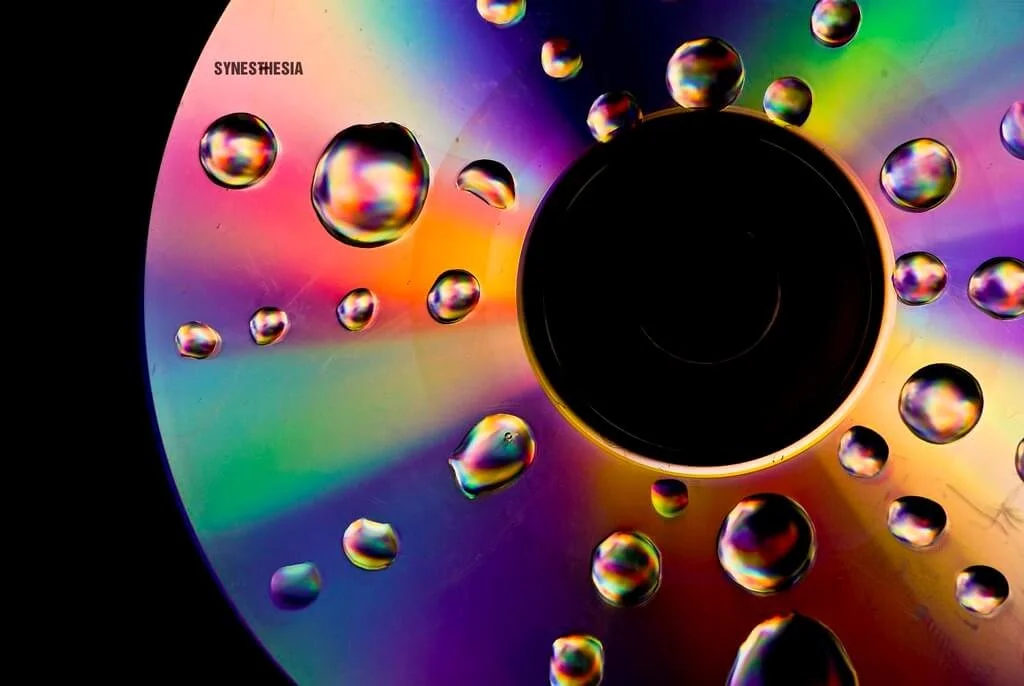
The most common theory suggests that synesthesia arises from “crossed wires” in the brain — regions responsible for one type of processing (like grapheme recognition) remain unusually connected to nearby areas (like the colour-processing visual cortex). Most people’s brains “prune” these links early in life. In synesthetes, some pruning may fail, resulting in lifelong cross-activation. But this framing assumes that separated perception is the baseline. It might be the other way around: the connections may be original, and pruning the learned behavior, per Merleau-Ponty.
Because of its vivid nature, synesthesia has long fascinated artists. Nabokov had it. So did Tesla, Ellington, Hockney, and Pharrell. Vincent van Gogh may have. Aphex Twin has spoken about it in interviews. Beethoven reportedly described B minor as black and D major as orange. Liszt once implored his orchestra: “That is a deep violet, please, not so rose!”
Personally, I think everyone can visualise and connect sensory impressions. It’s the same way we picture our house when we’re away, or imagine the face of someone we’ve lost. We all have the mind’s eye. Certain images evoke certain feelings. Certain feelings conjure certain images. The difference, for a synesthete, is that these pairings aren’t imaginative. They’re involuntary.
Try this: close your eyes and picture a sheet of craft paper painted bright yellow. Just let the colour hang in your mind’s eye. That mental image — the yellow — is similar to what I see automatically whenever I hear the word Tuesday, or hear the opening chords of Dayvan Cowboy, or read the letter S. It’s that simple, and that strange.

Have you ever closed your eyes in sunlight and watched the light play against the inside of your eyelids? Listening to Chopin’s second Nocturne in E-flat major, I experience something similar: pale cerulean waves, slowly darkening as the piece swells. Around bar 30, when the pianist is urged to play con forza and those chords descend in heavy clusters, the colour deepens — finally arriving at a kind of midnight blue. The sensory effect is both stunning and indescribable.
When everything has a colour, the world gains a second layer. A secret one. Each of my most meaningful songs — LCD Soundsystem’s All My Friends, Elliott Smith’s Angeles, Beethoven’s Moonlight Sonata, Songs: Ohia’s Blue Chicago Moon, the Beatles’ Yesterday — pulls me into a world that exists only for me. The synesthetic element is just one layer, though. Memory adds another. Together they create a deeply personal, emotional landscape I can re-enter any time.
Of course, there’s a point where any unusual experience crosses from relatable to diagnosable. But I’d argue synesthesia seems most extraordinary because it’s automatic. It is normal to link sensory memory with perception, though it usually requires some effort.
Every artist does this. Think of how many poems, films, and albums have tried to capture the colour of a moment. To express a season, a heartbreak, a place.

The human mind is, by nature, associative. And so, while my synesthesia feels personal, even sacred, I don’t think it makes me special — just fortunate. These associations and sensory echoes are precious to me. But so is the knowledge that every person has access to their own version of an inner kaleidoscope — some personal vocabulary of colour and sound.
Monet wasn’t a synesthete, to our knowledge. And yet his paintings feel like a form of it. I’m reminded that art doesn’t rely on neurological difference; it relies on attention, on sensitivity, on the courage to express what you feel.
We all perceive the world differently. Synesthesia just reminds me that perception itself is a form of magic.
Picture that.