
The Field That Holds

There is an unease I could not name until I read my own pieces side by side. In Second Naivety, I wrote about the way a mature maker stops displaying technique and starts appearing simple. In After Everything, Snow, I tried to follow Issa through grief to a form of attention that persists after the self has been eroded. What stayed with me was the uncanny symmetry in the conditions they describe. On the face of it, the transparency of the craftsperson and the receptivity of the undemanding listener look like different virtues. They are often filed under vague headings: presence, attention, openness. Those words do not help because they are placeholders for something more precise: the two conditions are the same structure seen from opposite sides of the work.
Nishida had a word for that structure: basho. The Kyoto School called it place, but that translation misleads: basho is not a container into which objects are thrown. It is the field without which subject and object cannot diverge enough to meet. Nishida was looking for a locus more comprehensive than the split between subjective awareness and the world it grasps. In his logic of place he wrote that knowledge cannot be reduced to a subject constructing an object; both sides are already held within a “locus of non‑differentiation” that is field‑like. This field is not a thing; it is literally nothing, without any of the characteristics that belong to the parts. Yet it is active and necessary. It is what allows a text to have a context, a note to have a timbre, a snowflake to be distinct enough to land on a bedspread.
Without a field, nothing appears. Without a practitioner who has become a field, there is no work. Without a listener who has become a field, there is no encounter.
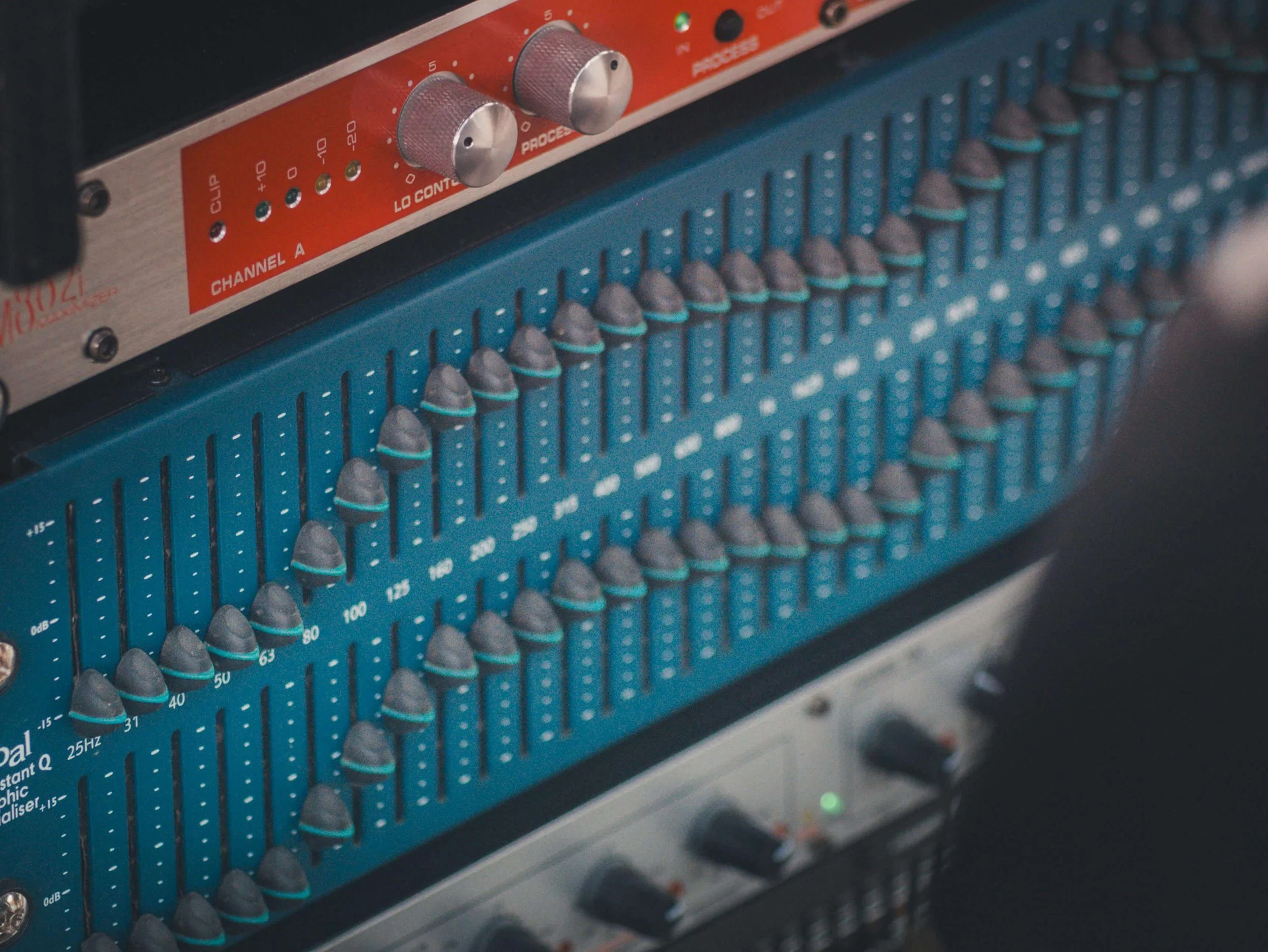
This sounds abstract until you bring it into the studio. In Second Naivety I argued that the later phases of craft often look deceptively simple because the maker has internalized analysis so completely that it no longer has to announce itself. In mastering, every separation remains real — spectral balance, transient shape, density, width, depth. A younger engineer toggles between categories. Brightness reads as brightness, punch as punch. The intervention has to be audible so that the practitioner can hear their own competence. That is as far as many stop: a performance of control. Decades later, the committed engineer is no longer applying heavy-handed adjustments to a track. The practitioner has stopped being an actor manipulating objects and has become the field in which the material can assume its inevitable form. That field is an operational emptiness in which each decision is made and vanishes. The record arrives as itself because nothing is sitting between the engineer and the sound. Frequencies are adjusted, phase relationships corrected, transients shaped, but none of these movements step forward to claim credit. The work is felt all at once.
The same dynamic holds at the other end of perception. In After Everything, Snow I tried to describe what is left of attention after losses that would justify complete closure. Issa’s late poems are humble records of perception that has survived devastation. When he writes that snow on his bedspread is a gift, he is not extracting a lesson. He is demonstrating what happens when receptivity outlives self‑protection. Simone Weil once wrote that attention at its highest degree is the same thing as prayer; she meant a quality of regard in which the self no longer needs to seize. Issa does not reach for the event. Snow enters and is registered as snow. The demanding self has loosened its hold. That loosening is the same maturity that allowed the engineer to stop making their own technique visible. The receiver has become a field in which the event can land as itself.

Once you see it, you cannot go back to thinking that mature making and mature listening are different achievements. In both cases the self stops being a subject acting on an object and becomes the ground within which the object can be fully present. Nishida’s insight is that this is not mystical but structural. Subject and object, maker and receiver, are not two things that happen to align; they are two specifications arising within the same field. Basho is that field. Maturity is the consequence of returning to it again and again, not by detaching from technique or shutting down perception but by passing so thoroughly through analysis and mediation that they become transparent. In Jungian terms, one might say that the ego has stopped identifying itself with its functions and has recognized a deeper Self that contains oppositions without collapsing them. Better to say, with Nishida, that the ultimate “within” of our experience is a topos of absolute nothingness that underlies both being and non‑being. The point is not to access basho; it is what we already are whenever we stop gripping the world so tightly that it cannot arrive.
There is a political stake here. In my view, the opposite of basho is optimization. An optimized life treats reality as a pipeline of tasks to be completed, signals to be maximized, metrics to be satisfied. It rewards visible sophistication and penalizes silent mastery. Everything becomes selection‑for‑action, to borrow Wayne Wu’s phrase once again. In that context there is no space for a field that holds both maker and receiver. There is only throughput. The logic of optimization collapses the space in which things can appear because it cannot stop acting long enough to become the ground on which anything might stand. A culture of continuous performance cannot see a field because a field looks like “nothing,” and nothing, in the sense Nishida meant, is illegible to a world trained to measure something. The collapse of field into pipeline is the collapse of both making and receiving at once.

That is why the concrete craft example matters. At my most mature as a mastering engineer, I am not “doing” things to a track. I am becoming the field in which the track can become itself. Many of the final moves are often inaudible to anyone else: an infinitesimal tilt to the midrange, a subtle control of low‑frequency decay, a gentle shaping of transient density so that the chorus does not wilt. They look like nothing because they are no‑thing in the Nishidian sense; not an object added to the work but the emptiness that lets the work appear. That is why late Cézanne looks simple and hits harder. That is why Issa registers snow as snow after the world has taken almost everything from him. When technique and perception have both become transparent, the field endures. Snow on a bedspread, a song passing through speakers, both are particulars. Basho is what allows them to exist, and it survives what happens inside it.
I return, finally, to Issa’s bedspread. Snow falls through the roof of a ruined storehouse onto the bedding of a man who has buried children and a wife. He does not praise or condemn it. He does not convert it into a metaphor for suffering or salvation. He simply notes its presence and names it a gift. He does this because his attention has been cultivated long enough that the world can still enter even when the self has every reason to shut it out. The field holds. That is what matters. In a culture that rewards visible sophistication and constant optimization, remembering how to become a field — on either end of the work — may be the most radical form of craft left to us.