Fidelity at the Gap: What Mastering Shares With Translation

Some crafts are defined less by what they produce than by how they handle an unbridgeable gap. Literary translation is the obvious example: there is no way to carry a text from one language to another without altering it, because languages do not map cleanly onto each other. As I see it, the translator has three obligations — to the author’s intent, to the target language and to the reader — and if they are faithful to only one, they cannot be faithful to the art. Those obligations pull in different directions.
Mastering belongs in the same category. Between a mix created in a controlled room and the infinity of playback environments it will have to survive, there is an unknowable gulf. A mobile speaker, a car stereo and earbuds each have a different frequency response; if your bass booms on your studio monitors, it will not boom the same way on your phone. Expecting a mix to sound “perfect” everywhere is unwise. A song may sound remarkable in the mastering studio and unrecognizable in a car or on inexpensive earbuds . The role of a mastering engineer is to make sure it sounds great regardless.
In both cases (literary translation and mastering) there is something that cannot be done. The translator cannot reproduce the original in the target language because the lexical and syntactical systems of the languages diverge, and formal equivalence often produces nonsense. Good translators therefore work with dynamic equivalence: they change every word to preserve the sentence. They replace French idioms like treize à la douzaine with English ones like “ten a penny,” and they shift titles from L’Enfant noir to The African Child when a literal rendering would misrepresent the author’s intent. They alter the surface to protect the substance. Fidelity, properly understood, is threefold: not only to the words, but to the content, the period, and the genesis of the meaning. Fidelity to one dimension at the expense of the others is not fidelity at all.
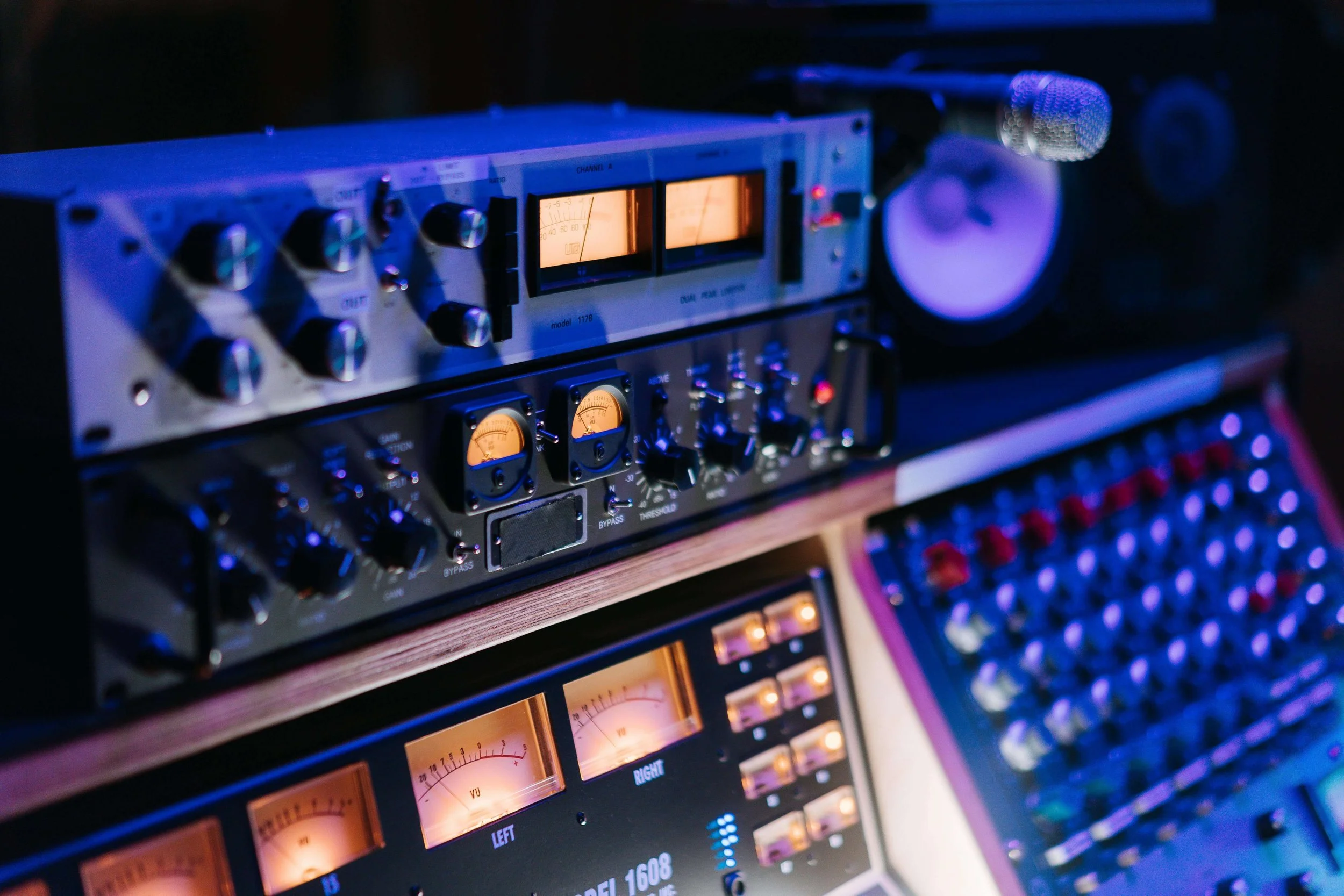
The mastering engineer faces a parallel impossibility. Different playback systems cannot reproduce the same frequencies or dynamics. A mix built on micro‑details that only appear in a treated environment will fall apart on consumer speakers. A song might sound rich and detailed in a car but lifeless on headphones because every playback system has its own sound signature. It is impossible to make a track sound identical and “correct” everywhere, but it is possible to make it representative everywhere. The engineer changes the spectrum to preserve the feeling. They add harmonics to a sub‑bass note so that higher order harmonics register in the low midrange for phones; they nudge the midrange so that vocals cut through on laptop speakers; they adjust compression so that dynamics read as punch rather than mush across systems. They are faithful to what the record is trying to do, at the cost of fidelity to how it sounds in one room.
This is an ethical posture rather than a technical trick. The hazard in both translation and mastering is the same: the practitioner substituting their own signature for the work. The translator who renders everything into their own style, regardless of the source, produces a text that is competent and wrong. Lawrence Venuti’s critique of domesticating translations notes that dominant notions of fluency can conceal the foreignness of a text and assimilate it to the receiving culture. Such translations are praised for readability, but they erase what made the original worth carrying. The mastering engineer who applies the same preset spectral curve and compression settings to every record does the equivalent. Their brand becomes louder than the artist’s intent, and the mix is domesticated to the engineer’s taste. In both cases the practitioner claims the work for themselves.

The development described in Second Naivety (where technique becomes transparent ) makes a different outcome possible. The mature translator disappears into the work. They are not trying to be modest; they have trained themselves to prefer the survival of the original to the expression of their own voice. They know that fidelity does not mean word‑for‑word replication but faithfulness to an intent that cannot be literally reproduced. The mature mastering engineer does the same. They have listened to so many systems and made so many tiny adjustments that they no longer need to announce their interventions. They tune the low‑end so that a sub-bassline can be felt on a club system and still register as notes on earbuds. Such moves are audible only in what survives of the song. The engineer’s signature is the absence of signature.
This kind of invisibility is not purity. It is a discipline. It is refusing the temptation to make the work into a showcase for one’s own tastes. It is choosing to accept the unbridgeable gap rather than pretend to have eliminated it. The translator does not rescue every nuance of a poem; they find the closest available rhyme or rhythm and accept the loss. The engineer does not save every transient; they prioritise the groove that will carry across systems. In both cases the craft is a practice of carrying across without replacing. You cannot bridge the gap, but you can build a path wide enough for the essential to cross.